Taste of Bavaria · Munich & Surroundings
Food & Drink in Bavaria: What to Actually Order
Personally visited by Martin · 19 September 2026
I've eaten my way through the Bavarian classics by now — Weißwurst the proper way before noon, Schweinshaxe, Kaiserschmarrn at a mountain hut after a hike, Obazda with a fresh Brezn — and worked through most of the beer list too, from a Helles straight out of the barrel at Augustiner to a Maß of Festbier at Oktoberfest. Here's what's actually worth ordering, how the beer gardens work, and why the rules are stricter than they look.
The dishes worth ordering
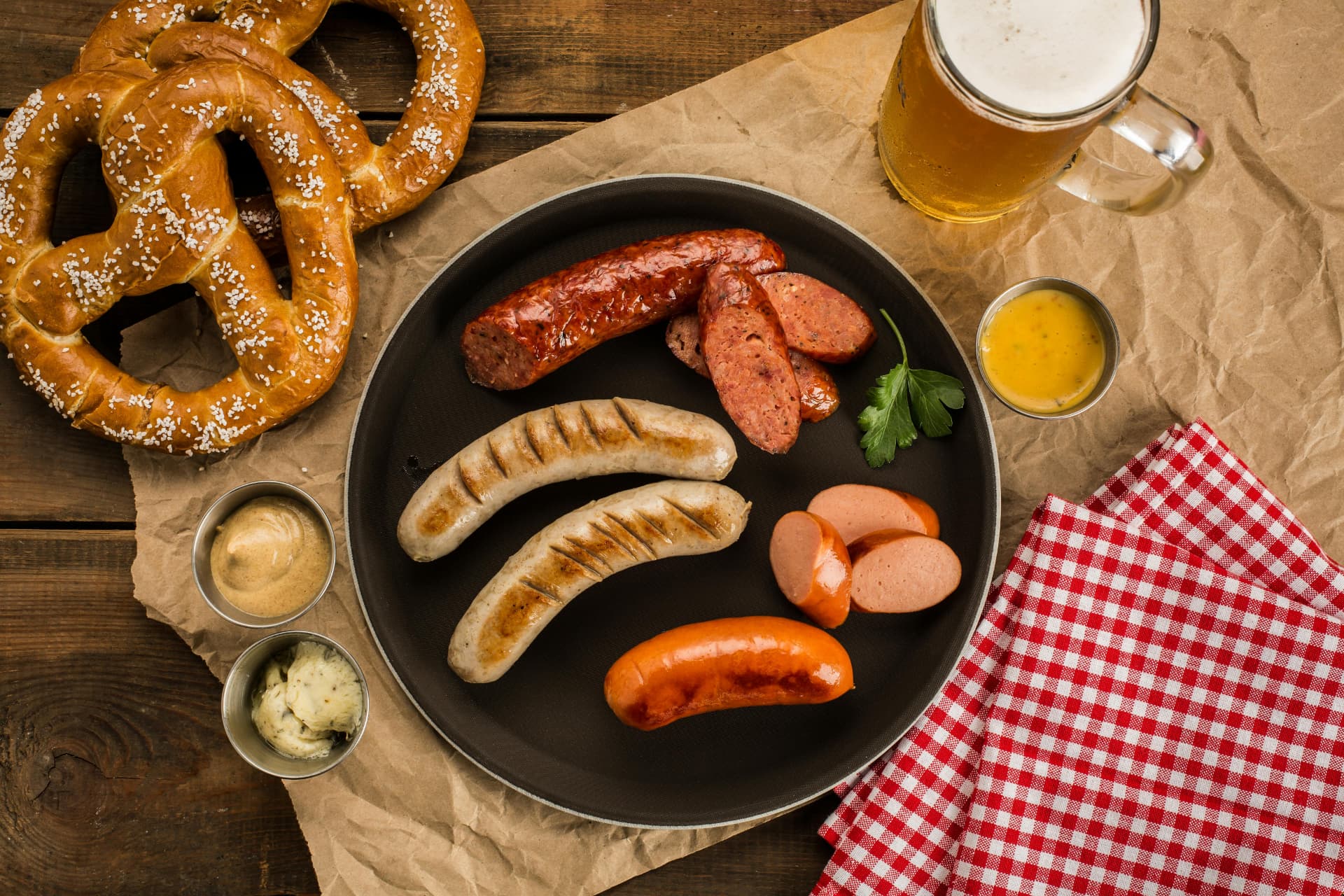
Weißwurst (roughly €6–9 for the standard pair) is the one with the actual etiquette attached, and it's worth doing properly: traditionally eaten before noon, never with a knife — you slit the casing, then either peel it away or "zuzeln" it, sucking the sausage out of its skin. It sounds like a tourist gimmick until you've done it; it isn't. Served with sweet mustard and a pretzel, and the tradition dates back to a supposed 19th-century kitchen shortage when a Munich innkeeper ran out of the right casings and improvised — whether or not that story's literally true, the before-noon rule stuck because the sausage was never meant to keep.
Schweinshaxe (€16–22) — a roasted pork knuckle, crackling skin, usually with a potato dumpling (Kartoffelknödel) and red cabbage — is the dish to order when you want to see a table go quiet for twenty minutes. Obazda (€7–10 as a beer-garden portion), the spiced cheese spread (Camembert or Brie mashed with butter, paprika, and onion) served with a fresh Brezn (€2–4 on its own), is the better order when you just want a beer-garden snack rather than a full meal — it's what I've had most often, since it's the classic Brotzeit order. Käsespätzle (€10–14 as a restaurant main, cheaper as a market portion) — soft egg noodles baked with melted cheese and crispy onions — is the closest thing Bavaria has to comfort-food mac and cheese, though it's technically a Swabian import like its cousin Maultaschen (German ravioli, usually pork and spinach, similar price range), both of which show up on Bavarian menus constantly regardless of where the border actually is.
Up in the mountains, Kaiserschmarrn (€9–14 in town, more like €14–15 at a mountain hut, where everything costs a bit more) — a shredded, caramelized pancake dusted with sugar and served with apple sauce — is the post-hike reward; I've had it at Taubensteinhaus after a proper climb, and it earns its calories. Semmelknödel mit Pilzrahm (bread dumplings in mushroom cream sauce) and Sauerbraten (a marinated, slow-braised pot roast, more of a Franconian specialty in the north of the state) round out the hearty end of the menu, both typically in the €14–20 range as a main. Alpine trout, usually simply pan-fried, is the lighter option near any of the lakes, priced similarly to the other mains. And at Christmas markets, it's Nürnberger Rostbratwürste — small, grilled sausages in a bread roll, around €4–6 — alongside roasted almonds (€4–6 a cone) and mulled wine (Glühwein, €3.50–5).
Beer culture, and the law behind it
Bavarian beer still runs on the Reinheitsgebot, the purity law first issued in 1516: originally just barley, hops, and water (yeast wasn't yet understood as an ingredient), and still the baseline every Bavarian brewery works within today. It's less a marketing line than people assume — it's why the beer here tastes the way it does, and why the style range, while excellent, is genuinely narrower than what you'd find in a country without the restriction.
Within that range there's real variety worth trying. Helles is the everyday lager and the one most people mean when they just say "a beer" — a regular 0.5-liter (Halbe) runs about €4–6 at a normal beer garden, a full Maß around €9–13. I've had it most often straight from the wooden barrel (Holzfass) at Augustiner Keller, which is a noticeably different pour than the usual tap. Weißbier (wheat beer, cloudy, served in a tall glass) is the other default, fruitier and a good match for a warm afternoon, similarly priced. Dunkles is the malty, darker lager; Radler is Helles cut with lemonade, the correct answer on a hot day when a full Maß is too much. Starkbier — strong, dark, and seasonal — is what Munich's Starkbierfest in March is built around, a much smaller and more local event than Oktoberfest. And Festbier, the stronger, slightly sweeter beer brewed specifically for Oktoberfest, is the one you'll actually be handed in the tents — it's not the same beer as the rest of the year, and it isn't priced the same either: a Maß in the tents runs €14.80–15.90 (2026 official range), noticeably more than an everyday beer garden.
How a beer garden actually works
Munich's beer gardens run on a rule that goes back to 1812: brewers were allowed to sell beer outdoors to keep it cool, but not food — so people started bringing their own, and the habit never went away. That's still the deal in a traditional beer garden's self-service area: you can bring your own Brotzeit (bread, cheese, cold cuts — the same idea as the Obazda-and-Brezn order above) as long as you buy your drinks there. It doesn't extend to delivery food — ordering in a pizza or kebab at the table is a fast way to get asked to leave, and some beer gardens have started banning outside food altogether, so it's worth a glance at the posted house rules before you unpack a picnic.
The self-service area is where you order at a counter and carry your own tray; the areas with proper tables, tablecloths, and waitstaff are table service, and bringing your own food there isn't the same unwritten deal — that part of the etiquette catches people out. Beer comes in a Maß, a full liter, and carrying three at once with one hand through the crossed fingers is the trick everyone's trying to learn by their second visit. Tables aren't reserved unless a "reserviert" sign says otherwise, and squeezing onto the end of a stranger's bench is completely normal — it's the whole point of the long communal tables. If someone raises a glass to toast, make eye contact while you clink; skipping that is considered bad luck, or at least bad manners.
Haki tip: Order the Obazda before you order anything else. It's the cheapest thing on most beer-garden menus, it takes five minutes to arrive, and it buys you time to figure out the rest of the menu without sitting there hungry while you decide.
Where to actually try it
One trip already on this site is worth building a whole day around: Bamberg, for Rauchbier (smoked beer) and a genuinely different beer town, about two hours out by train. This article is the general map; that's the actual destination — you'll find it under Taste of Bavaria.
Quick questions
- Do I really have to eat Weißwurst before noon?
- Traditionally, yes — it was never meant to keep, so the before-noon rule is about freshness, not superstition. Most restaurants that serve it will still bring it to you in the afternoon if you ask, but ordering it after lunch is a small tell that you didn't look this up first.
- Can I really just bring my own food into a beer garden?
- In the self-service section, yes — that's the actual tradition, not a loophole, and it dates back to an 1812 rule that let brewers sell beer outdoors but not food. It doesn't apply to the table-service section, and delivery food (pizza, kebab) isn't welcome anywhere. Check the posted house rules if you're not sure which section you're in.
- What's the one beer to try if I only get one?
- Helles, and ideally from a wooden barrel rather than the usual tap if the place offers it — it's the everyday Bavarian beer, and the barrel pour genuinely tastes different from the standard one.
Photos from the day
All shot by me on the visit. Swipe through.
A proper Brotzeitbrett at Oktoberfest 2024 — cold cuts, cheese, radishes, small pretzels, and chive cream-cheese sandwiches, the kind of board that's built for sharing over a few Maß.
1 / 8Useful links
- Oktoberfest.de — beer gardens at the Wiesn and in Munich — the 1812 ordinance history and how beer-garden self-service actually works, from the official Oktoberfest site
- Reinheitsgebot (German Beer Purity Law) — background — origin and rules of the 1516 purity law that still governs Bavarian brewing
- Oktoberfest.de — official beer price — the current-year official Maß price range at the Wiesn tents, updated annually by the festival itself
- Bierdex — live Munich beer price index — tracks real, current 0.5L Helles prices across ~380 Munich venues, so you can check today's actual price
- Munich beer gardens guide (Munich Tourism) — a practical rundown of the actual beer gardens (self-service vs. table-service, which ones, transit info) if you want to go beyond Augustiner Keller
Quick facts
- Region
- Munich & Surroundings
- Access
- Bavaria-wide — this guide covers food and drink across the whole region, not a single spot
- Distance
- 0 km from Munich
- Cost
- €€
- Best months
- Year-round — Oktoberfest (mid-Sept–early Oct) and the Christmas markets (late Nov–Dec 24) add seasonal specialties on top of the everyday menu.
- Crowds
- medium crowds (my assessment)
- Cuisine
- Bavarian, with Franconian and Swabian dishes that show up on local menus everywhere
Where it is
Bavaria, Germany
Weather
Full forecastMore in Munich & Surroundings
Renting a Car in Bavaria: What You Actually Need to Know
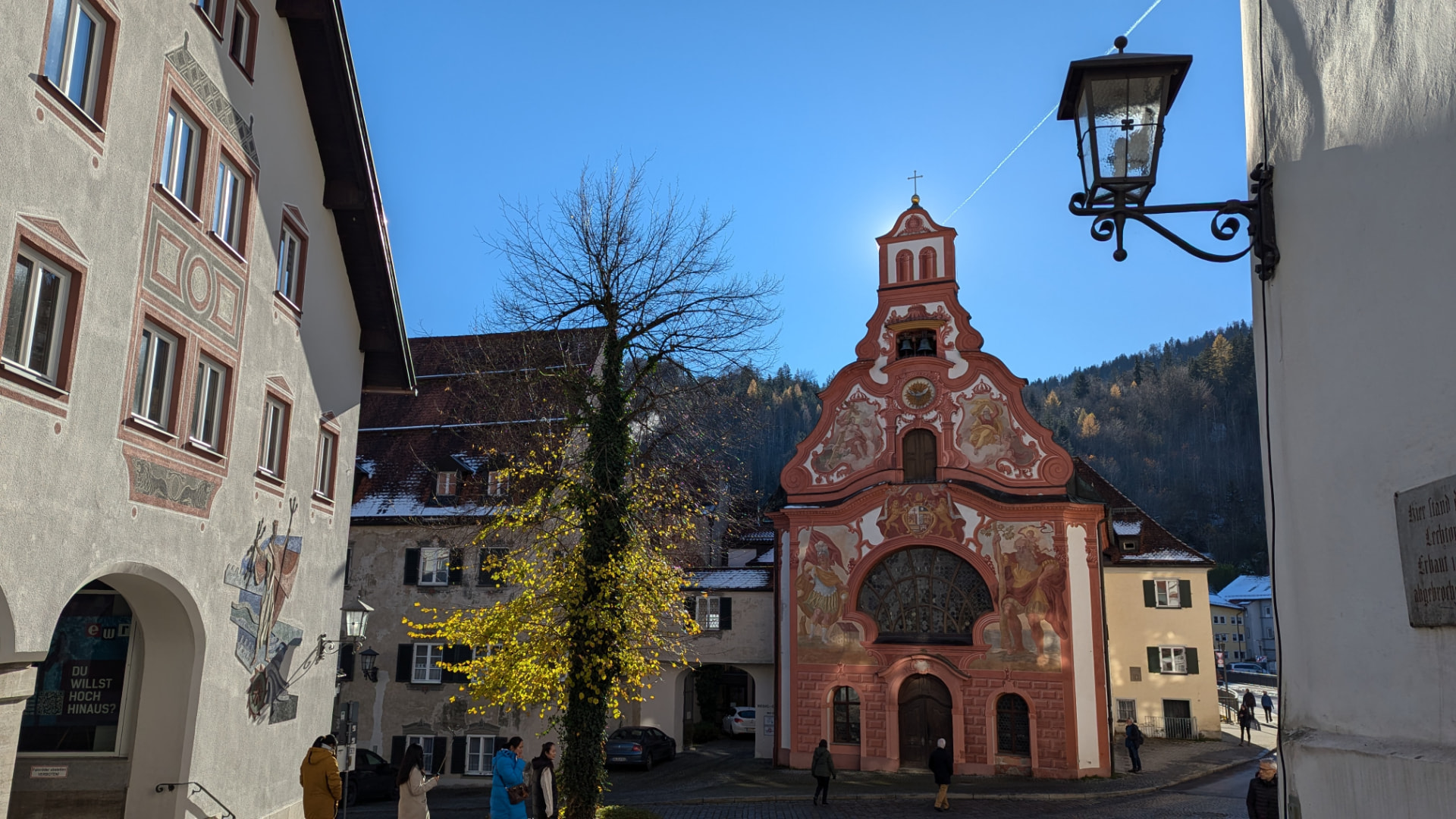
I don't rent a car when I'm in Bavaria — every trip on this blog gets there by train — but plenty of readers travel with family, gear, or a schedule that public transport just doesn't match. So here's everything I'd want to know before renting one here, checked against the actual rules rather than a rental company's fine print.
When to Visit Bavaria: A Season-by-Season Guide
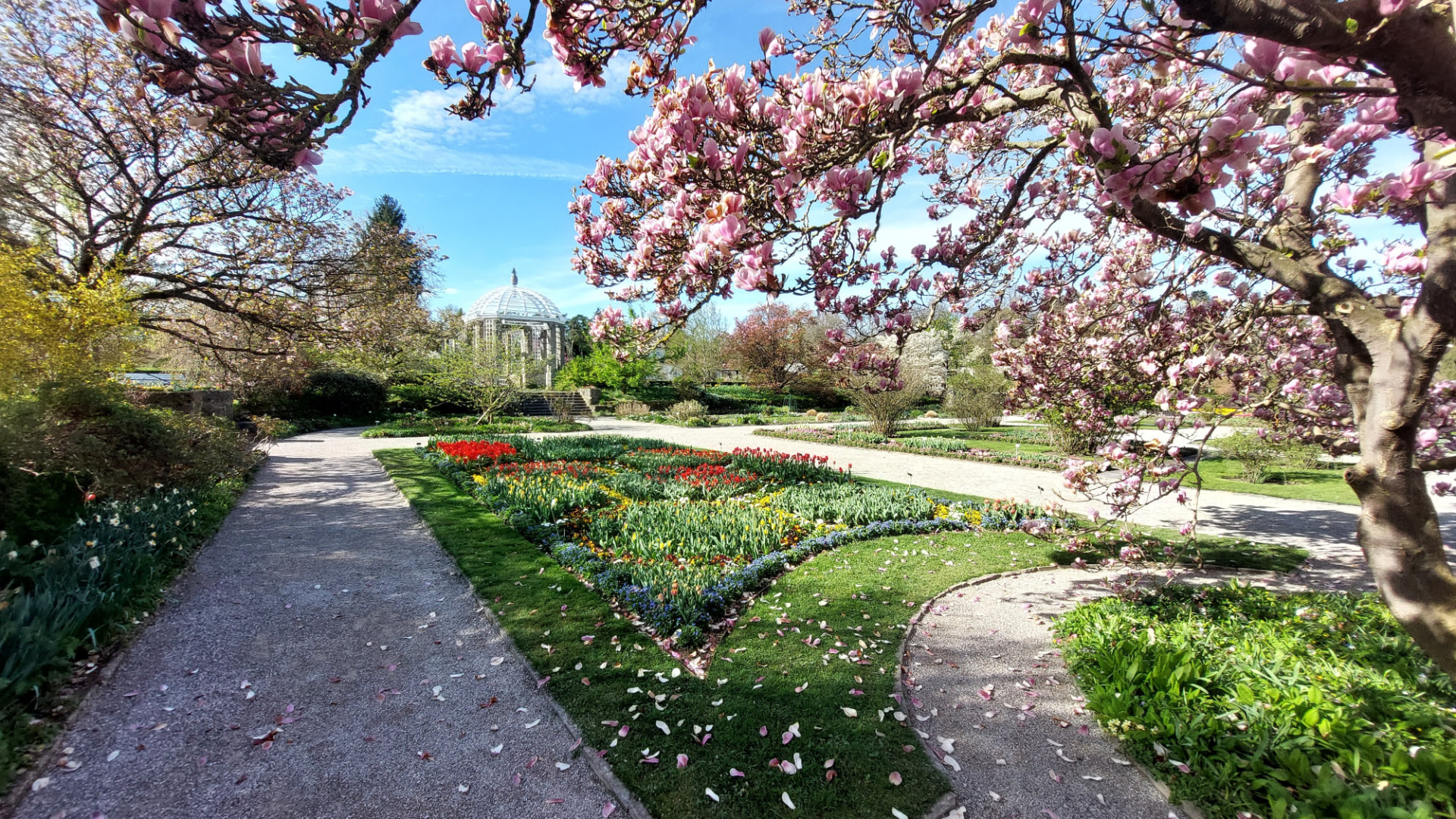
I've now hiked, eaten, and trained my way across Bavaria in spring, summer, and autumn — Bamberg in May, Eibsee and the Zugspitze in June and July, Karwendelbahn and Rotwand in September. Every season here looks like a different country. Here's what actually changes, month to month, based on what I've seen myself plus what I checked to fill the gaps.
One Day in Munich: How a Local Would Actually Spend It
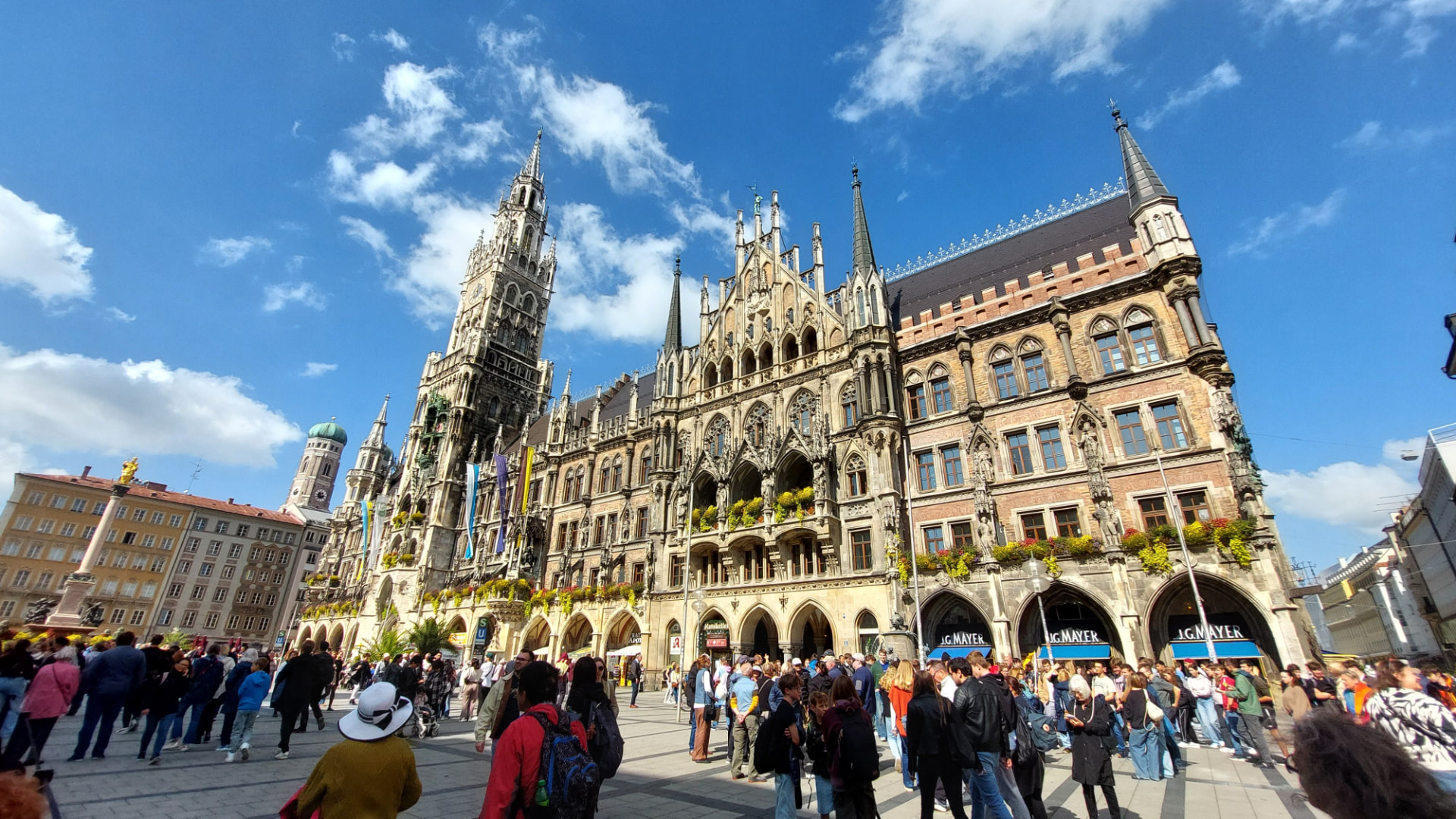
This is the route I actually take people on when they've only got one day in Munich — not a checklist of every famous sight, but the walk that starts at the square everyone calls by its nickname, takes a detour through a church most tourists miss, and ends with a choice: watch the sunset from a palace garden, or keep going to a hill with the best view in the city. It fits in a day on foot, tram, and (if you want) a rented bike, and every stop on it is one I go back to myself.
New trips, straight to your inbox
No spam. Just the routes, how to get there by train, and the best time to go.
By subscribing, you agree to receive the Haki Travels newsletter. We'll send you one email to confirm your subscription, and you can unsubscribe at any time. Privacy Policy