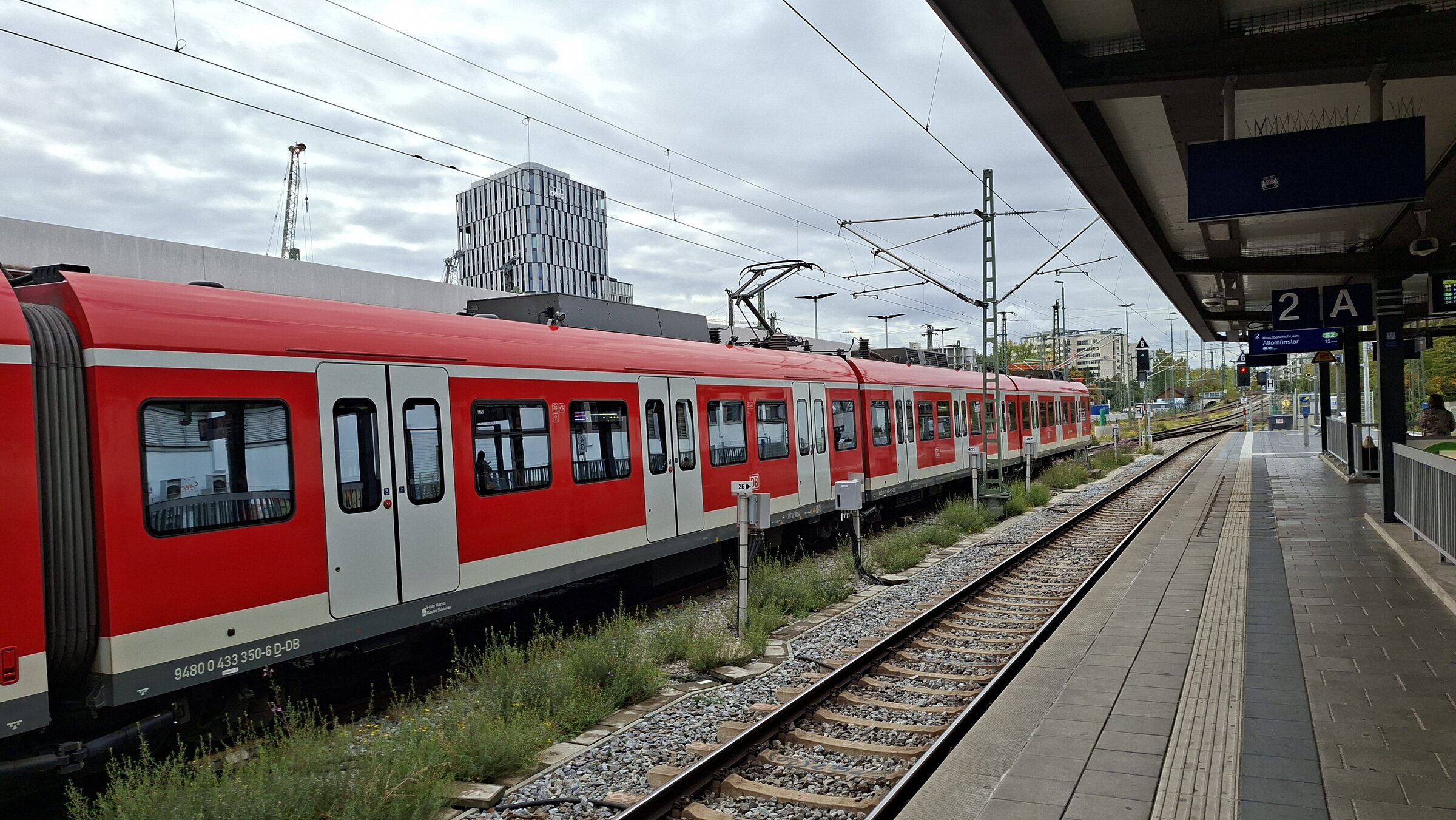
Practical Bavaria · Munich & Surroundings
Getting Around Munich: Tickets, Airport Transfers & Bikes
Personally visited by Martin · 11 October 2026
Munich's U-Bahn, S-Bahn, trams and buses all run under one ticket system — the real question is which ticket actually fits your trip. Here's how to pick it, how to get to and from the airport, what to do when a weekend closure swaps your train for a bus, and everything else I wish someone had told me before I worked it out myself.
Munich's public transport is one system — U-Bahn, S-Bahn, trams and buses are all run under one tariff, the MVV, so one ticket works on all of them. The hard part isn't the network. It's picking the right ticket for how long you're actually here.
So which ticket do you actually need? For one ride or a couple of short hops, that's a Kurzstrecke (short-trip ticket) or a single ticket. For one full day exploring the city, it's the Tageskarte (single-day ticket). Staying three days or more, a Wochenkarte (weekly ticket) beats three single-day tickets on price. Travelling as a group for one day, the Gruppen-Tageskarte covers up to five people on one ticket. Planning a longer stay with day trips into Bavaria too, the Deutschland-Ticket — more on that below — is usually the one. And if your visit is built around museums and sights, the München Card bundles transport with discounts at over 100 attractions.
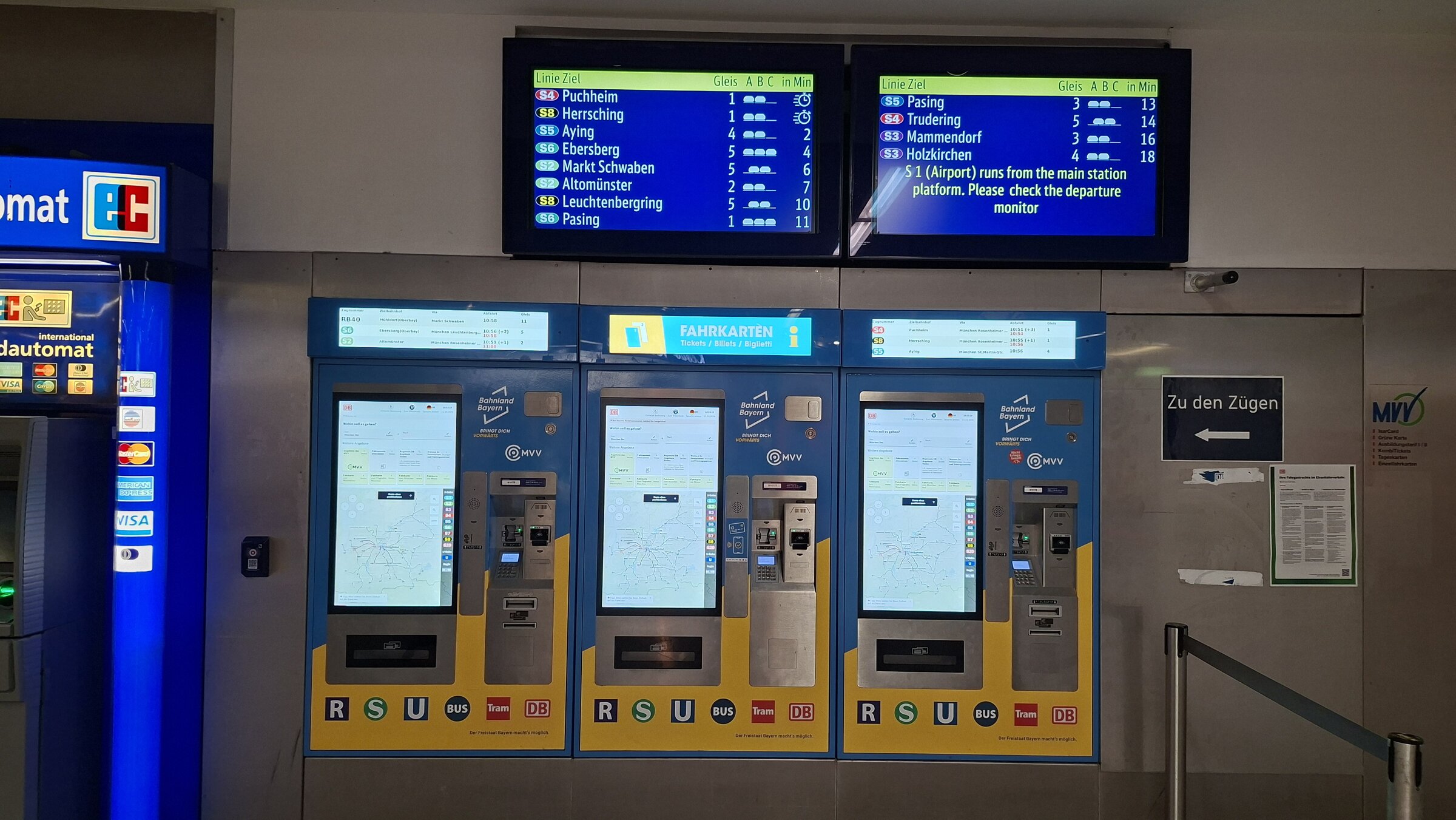
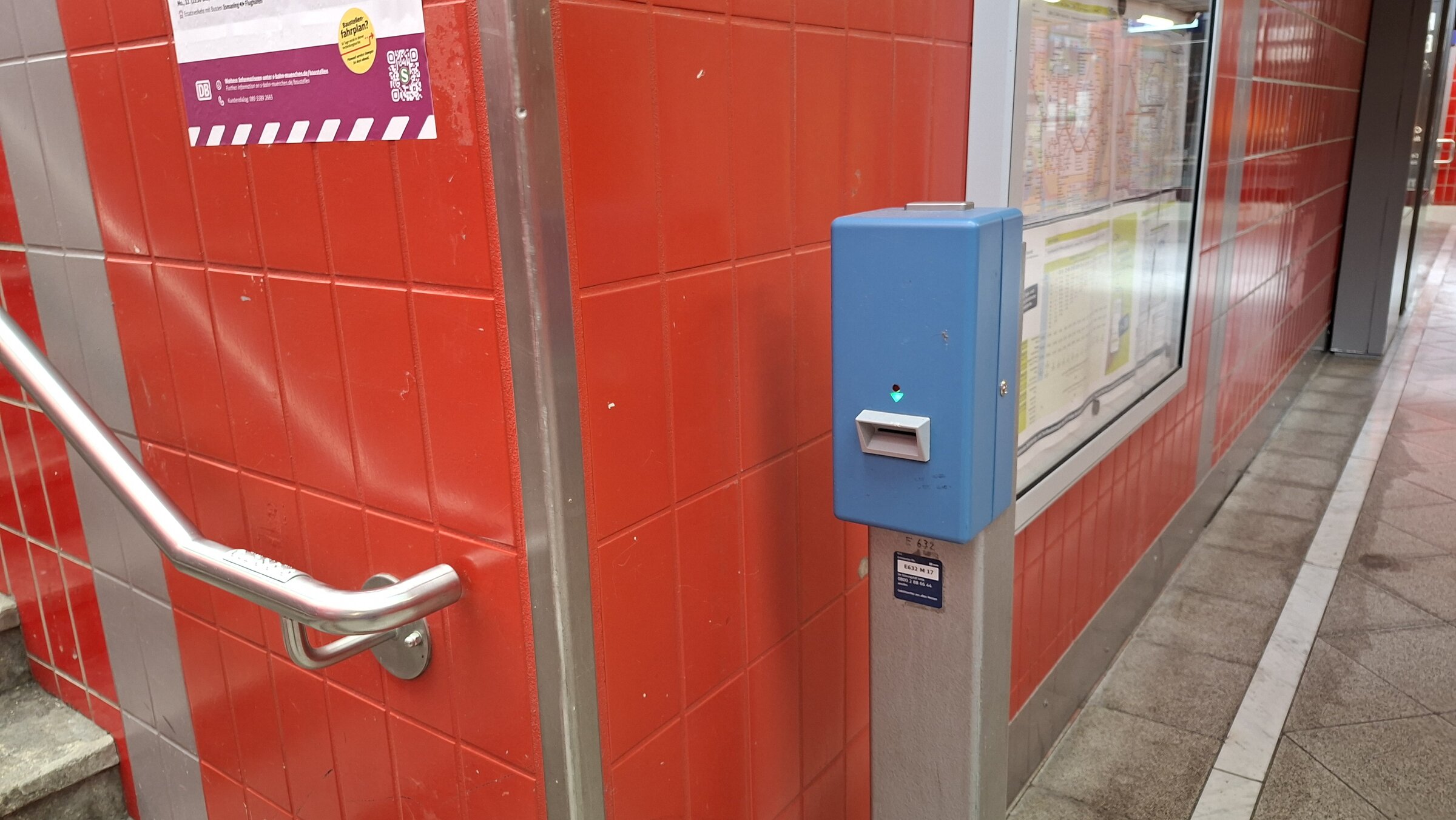
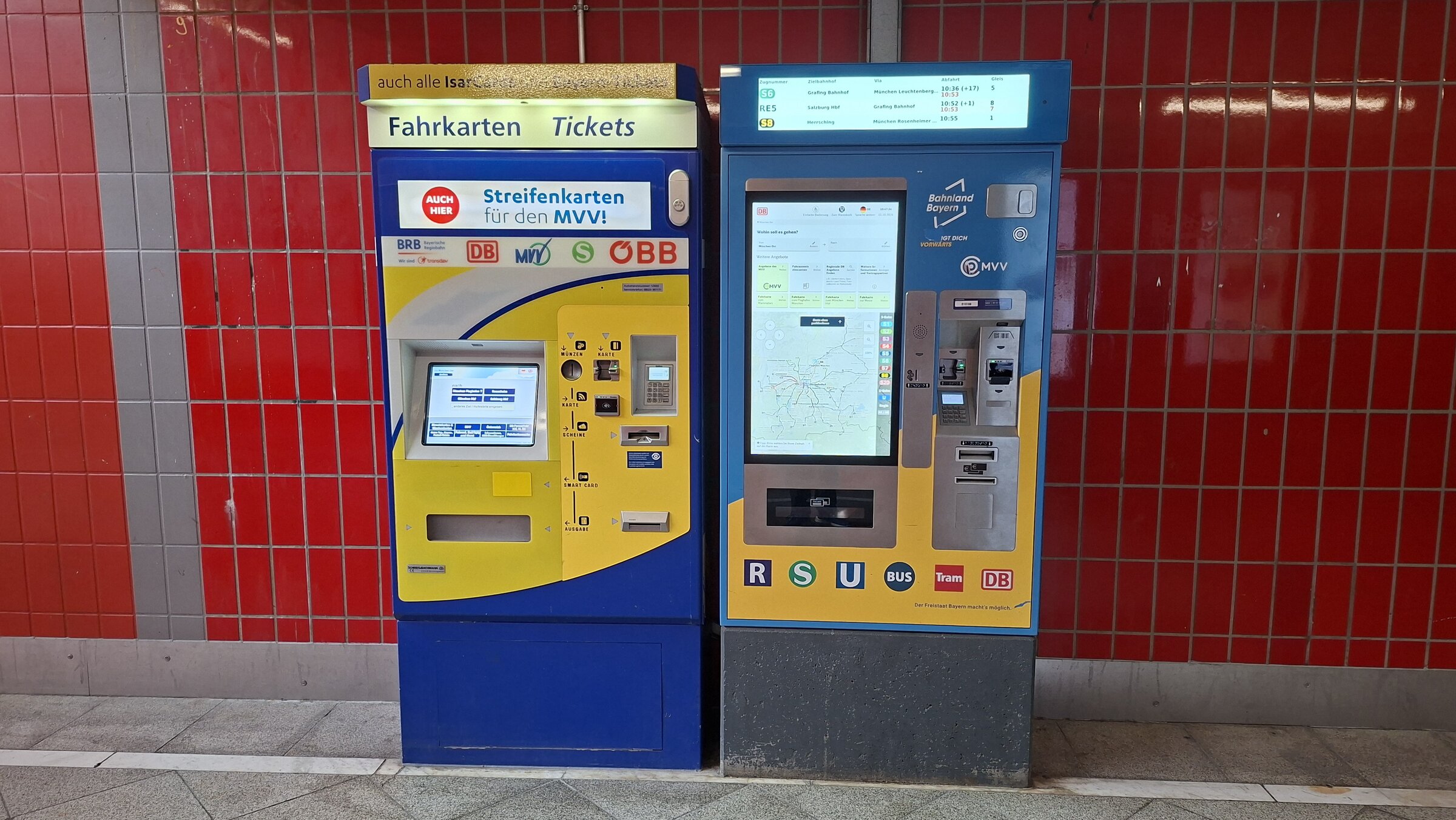
One thing to know before you ride: a paper ticket bought at a machine or counter needs to be validated at one of the small blue stamping machines by the entrance before your first journey. Some of the newer ticket machines will actually ask you at checkout whether you want it validated right away — take them up on it, it saves you the extra step. A digital ticket bought in the app is already time-stamped and ready to go — no separate validation needed. This matters most on the airport route specifically: inspections on trains to and from the airport are frequent, and an unvalidated paper ticket is an easy way to end up with a fine.
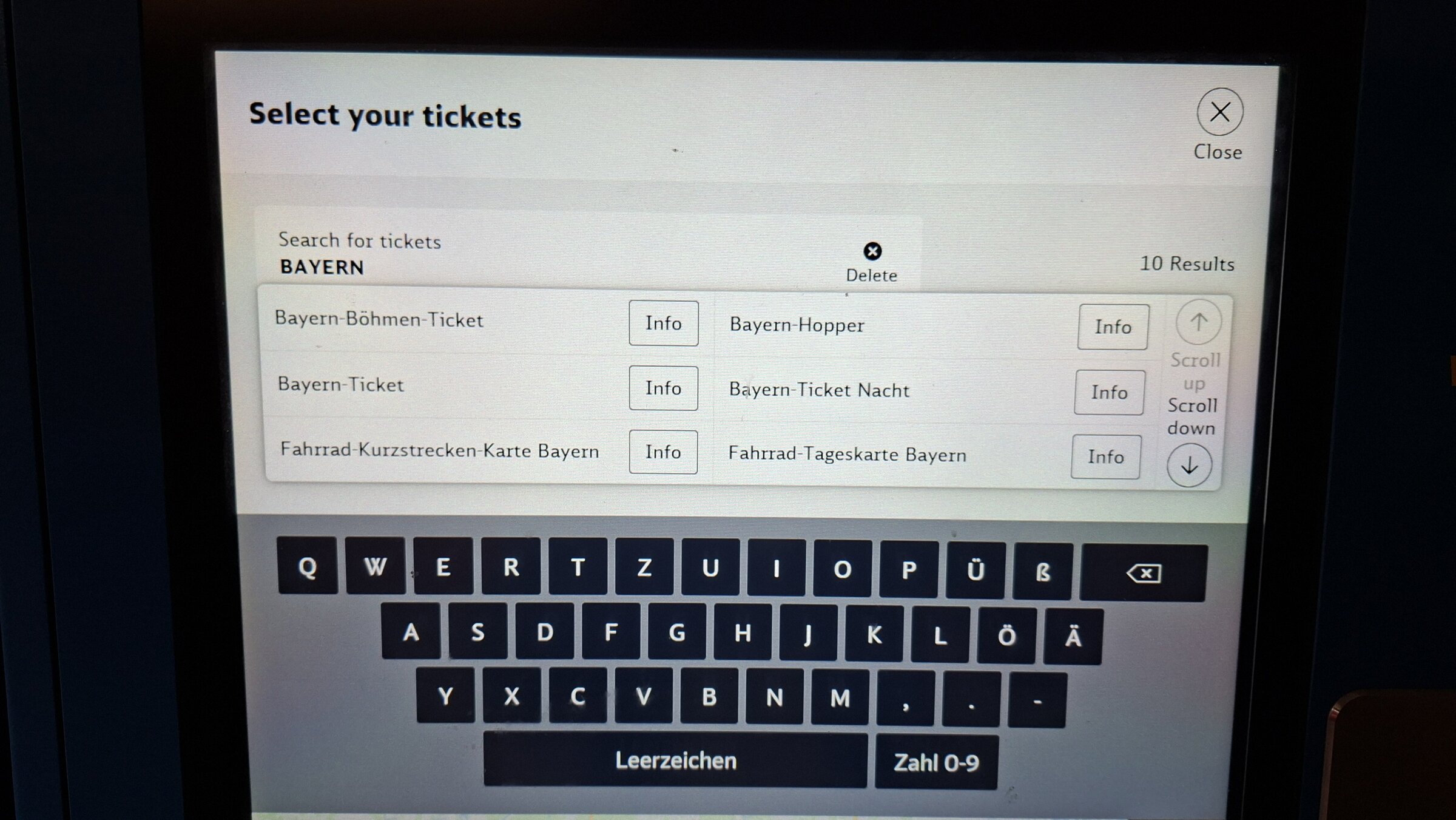
Tickets for a short stay
Kurzstrecke — a short-trip ticket for a handful of stops.
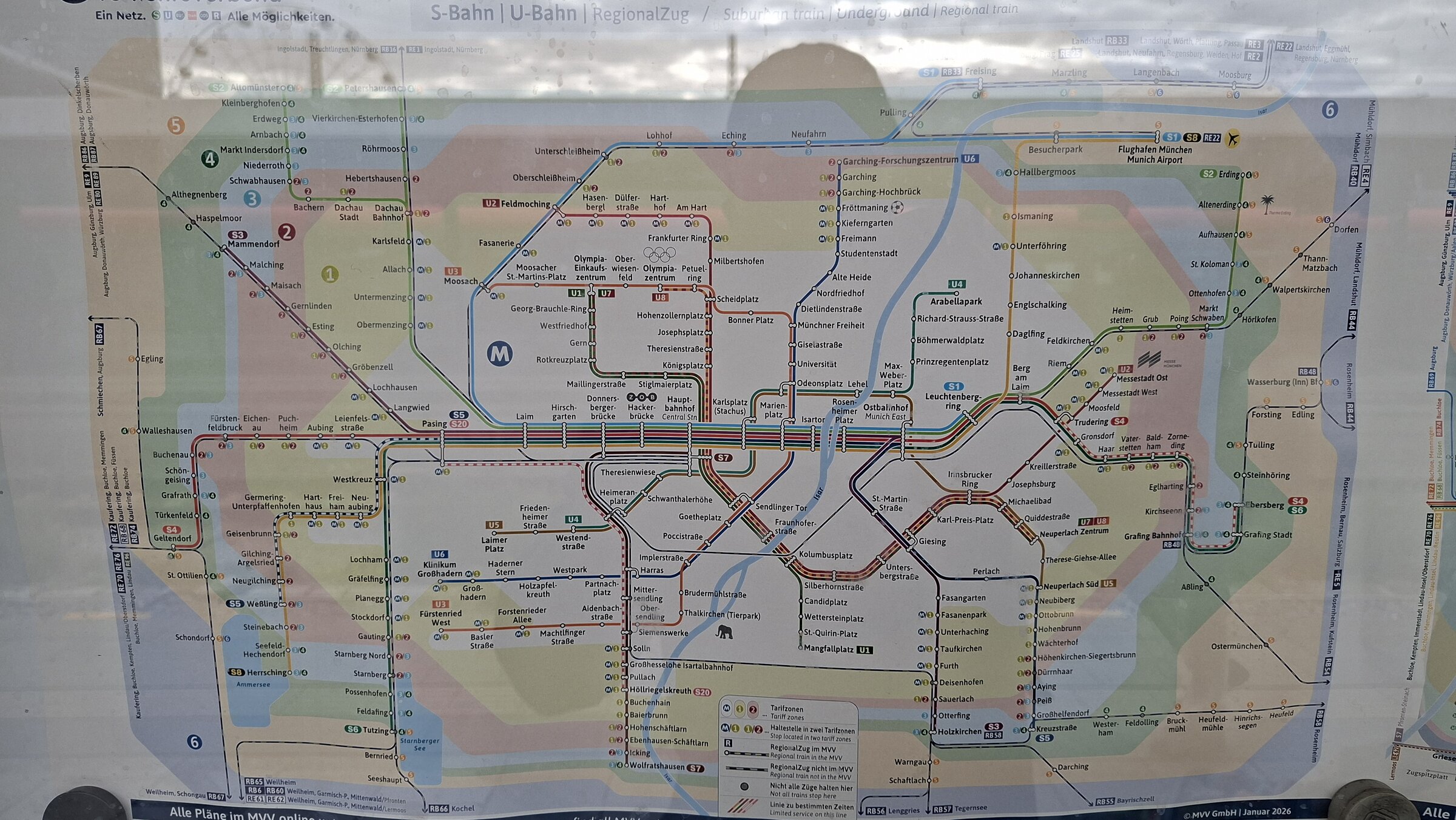
Einzelfahrkarte, Zone M — a standard single ticket covering the city. Zone M is bigger than it sounds — it's the whole central Munich area, and it's where most sights sit, including the Allianz Arena. Dachau, by contrast, is already one zone further out, in M-1.
Tageskarte, Zone M — unlimited travel in the city for one day. If you need it for more than two or three days, do the math against a Wochenkarte — it's usually the better deal.
Wochenkarte — valid for 7 consecutive days from your chosen start day, until noon the day after. It beats three single-day tickets on price, point for point. One thing worth knowing: the paper version and the digital version are not the same when it comes to who can use it. The digital ticket in the MVV app is personalised and tied to your device — it's issued to one named person and can only be moved to a different device a maximum of two times, never handed to someone else. If you want a ticket you can pass between travel companions, ask for the paper version at the counter and confirm its rules there, since that distinction isn't spelled out for the paper format online.
I only found out about that paper-versus-digital difference when a friend visiting for the weekend wanted to borrow my ticket for an afternoon while I slept in — turns out the digital one in the app is tied to me, not to whoever's holding my phone.
Gruppen-Tageskarte (group day ticket) — one ticket, up to 5 people, unlimited travel in the city for a day. Simplest option if you're a group doing a city day together.
München Card — if you're also planning to hit museums, palaces or tours, this is worth a look: it bundles transport with discounts of up to 70% at over 60 partner attractions and tours — the Residenz, Nymphenburg, the Deutsches Museum, Pinakotheken, hop-on-hop-off buses and more (each one only once, discounts don't stack). It comes in 1 to 5-day versions, for a single traveller or a group of up to 5 (two kids aged 6–14 count as one person). With the transport option for Zone M, it's roughly 16.90 € for 24 hours up to 40.90 € for 5 days per person (resellers' prices, correct at time of writing) — the Gesamtnetz version that also covers the airport, Starnberger See and Dachau costs more, and the card itself can be bought with or without transport at all. Check the current breakdown before you buy, since the option you pick genuinely changes the price.
The Deutschland-Ticket — and how to actually get one
It isn't a ticket you buy — it's a subscription, billed by the calendar month rather than for a fixed number of days from when you start.
What it is: 63 €/month, and it covers regional transport across all of Germany — not just Munich's MVV, but every regional train and local transit network nationwide. If your trip mixes city days with regional day trips, this is the one ticket that covers both.
How to get it: Through the MVV app (or bahn.de / DB Navigator) — not at a ticket machine; it isn't sold there. Set up the subscription, and it starts billing you monthly.
How you pay for it depends on where you buy it. At the time of writing, MVV's own sign-up only accepts credit card (with 3D Secure; cards issued outside the EU can be rejected) for a new subscription — not direct debit, despite what one step of their own instructions implies. If you sign up through a different seller, the payment method may differ. Don't assume one payment rule applies everywhere — check at checkout.
Because it's billed by the calendar month, not a rolling 30 days, cancelling it works like this (confirm the exact cutoff with whichever seller you sign up through, since it can vary): cancel by the 10th of the month, and it still runs through the end of that same calendar month — it just won't renew into the next one. Cancel after the 10th, and it runs through the end of the following month instead. With MVV, you cancel through the app (Ticketshop → profile → Abonnements → Kündigen) or via the personalised link in your confirmation email.
What that means in practice: say you arrive on the 3rd and leave on the 16th. Sign up on the 3rd, cancel it the same week (well before the 10th), and you're still covered for the whole rest of that month — including the days after you've already flown home, which don't cost you anything extra. It only works cleanly like this when your stay sits mostly within one calendar month; a trip spanning the turn of the month is a different calculation, since you'd be paying for a second partial month too.
Is it worth it for you? If you're only doing city transport for a few days, no — a Wochenkarte is simpler and cheaper. If you're combining city transport with multiple regional day trips over two weeks or more, the math usually favours the Deutschland-Ticket.
One more thing it's your proof of travel for: it's a personalised ticket. At a ticket check, you need to show photo ID alongside it — a screenshot of the ticket isn't accepted, you need the full digital ticket as issued. Travelling without valid proof risks a standard €60 fine, regardless of whether you genuinely had a valid subscription.
Paying without the app — and the tap-in/tap-out option
You don't need to register for anything to ride. Ticket machines at every U-Bahn/S-Bahn station sell the full range, and buses and trams have their own onboard touchscreen machines (cash accepted up to €20) — handy if you didn't plan ahead. MVG's ticket shop, new since September 2026, lets you buy a day ticket with no app and no account — you pay online and save it straight to Apple Wallet or Google Wallet, though currently it's day tickets only.
If you're going to be riding a lot and don't want to think about which ticket to buy each time, there's MVVswipe — a tap-in/tap-out system built entirely into the MVV app, with no physical reader anywhere in sight. Swipe right in the app when you board, swipe left when you leave, and it automatically works out your cheapest fare for the day, never charging you more than a day ticket would cost. It needs a one-time registration (credit card, PayPal, Apple Pay or Google Pay — not a standard debit card) and works on buses, trams, U-Bahn, S-Bahn and regional trains within the MVV area. It does not work on ICE/IC/EC trains, or on the Lufthansa Express Bus to the airport.
Construction work & replacement buses
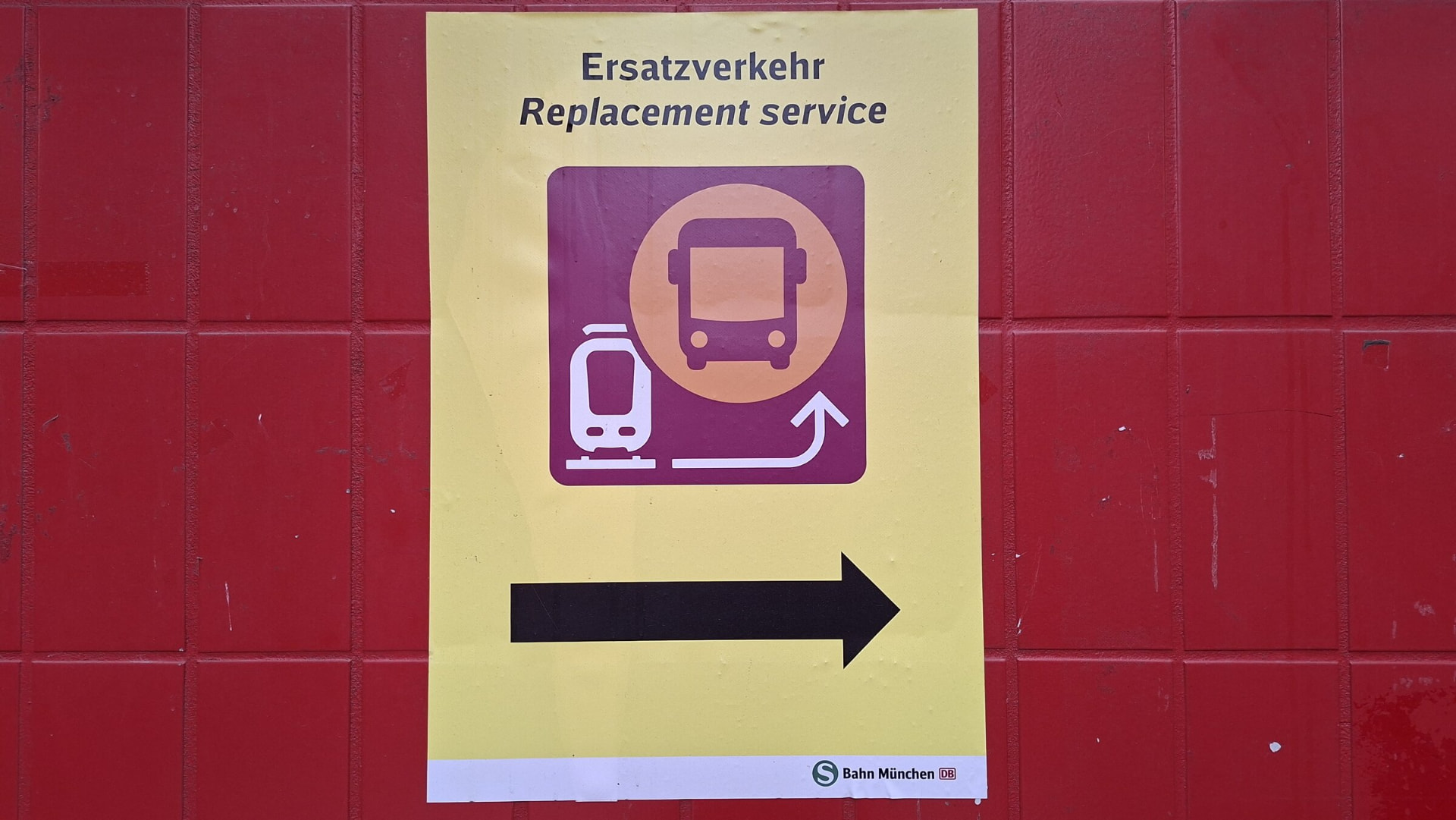
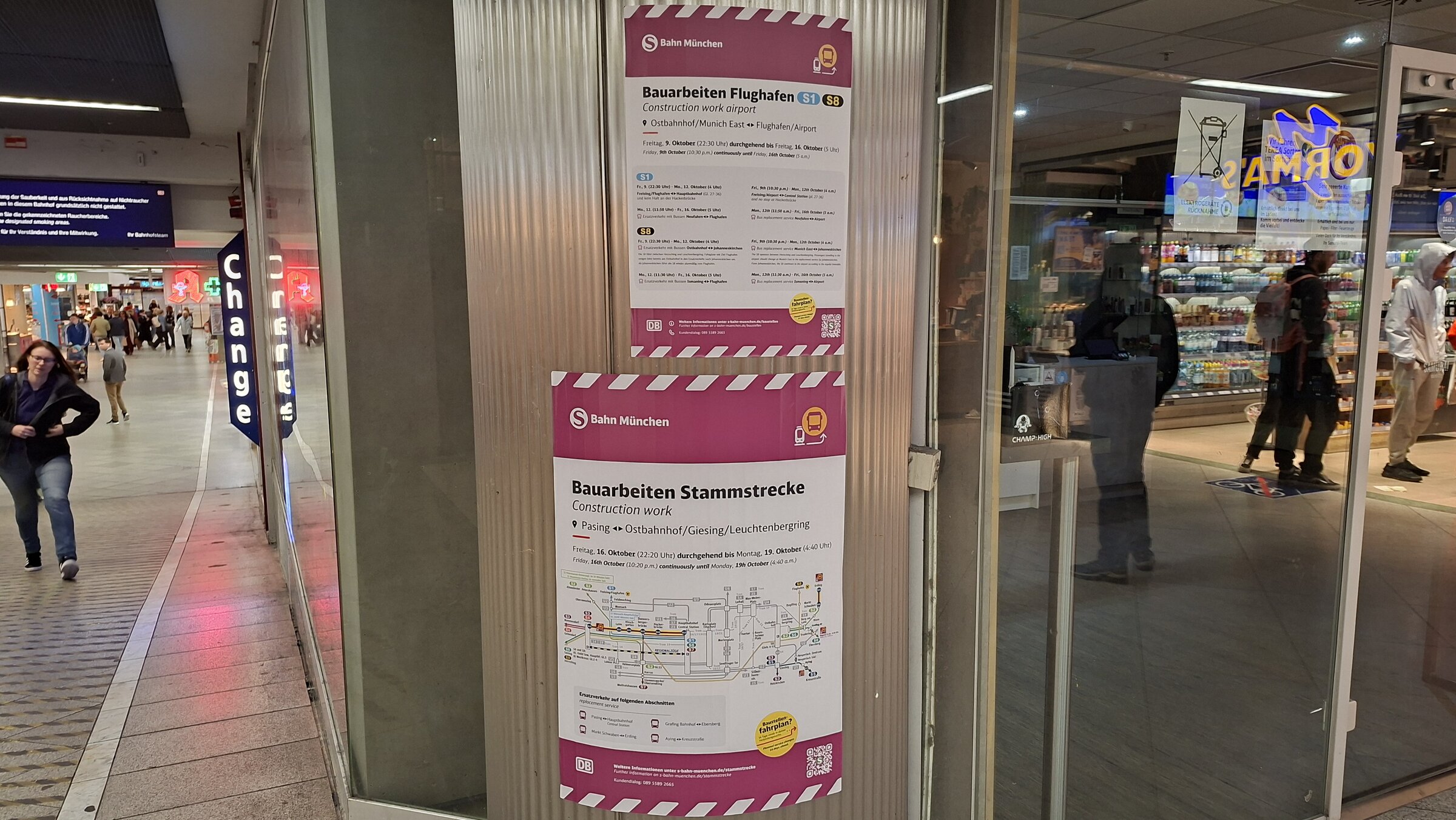
Munich's S-Bahn network runs maintenance and construction work year-round, and weekends get hit hardest — entire lines, or the stretch through the city centre, can be swapped for a replacement bus service (Ersatzverkehr) with little warning if you haven't checked ahead. Watch for the yellow and magenta posters at the station before you head down to the platform: they spell out which stretch is affected, on which dates, and where the replacement buses actually leave from — often a completely different spot outside the station, not the platform itself.
This is especially worth building into your plans for the airport route. Munich is in the middle of building a second S-Bahn tunnel under the city centre (the "2. Stammstrecke"), and that project will keep causing disruptions, closures and partial replacement services for several more years yet — the first tunnel-boring machine only started digging in September 2026. If you're catching a flight, build in extra time and check the MVG website or app the day before for any planned works on your line, rather than assuming the S-Bahn will run exactly as scheduled.
Getting to and from the airport
There's no single "best" way to the airport — it genuinely depends on your ticket, your group size, where you're starting from, and how the trains are running that day.
S-Bahn (S1 or S8) — the regular city train. The airport sits in fare zone M-5, not just Zone M, so a plain city-only ticket isn't enough — make sure whatever you buy (single, day ticket, or MVVswipe) covers M-5. A Deutschland-Ticket covers it automatically, since it's valid region-wide. What it costs: the airport-specific Airport-City-Day-Ticket (zones M–5) is 17.50 € for one person or 32.60 € for a group of up to 5 (two kids aged 6–14 count as one adult) — both valid for unlimited travel between the airport and the whole city until 6am the next day, and priced the same as a regular Tageskarte for zones M–5. If you only need one single trip rather than a full day, an Einzelfahrkarte covering M–5 runs roughly 13–15 € — though the day ticket is the better deal the moment you're making a return trip or adding a city excursion on top.
Lufthansa Express Bus — runs between the Hauptbahnhof and both airport terminals roughly every 20 minutes, taking about 45 minutes. Buy online and a single costs 12.50 € (one-way) or 20.30 € return; buying from the driver instead costs a bit more — 13.50 € / 21.50 €. A child's ticket (6–14) is 7.50 € single / 15 € return, and a family ticket (2 adults + up to 3 kids aged 6–14, online only) is 29.50 €. The useful bit: your Deutschland-Ticket is valid on this bus too (confirmed, this has been the case since 2023) — but MVVswipe is not. If you're using a Deutschland-Ticket here, have the digital ticket open and visible before you board; there's at least one documented case of a driver not recognising it, so don't assume it'll be obvious.
Taxi, Uber, Bolt & FREENOW
A regular Munich taxi runs on a fixed, published tariff: 5.90 € base fare, then 2.70 €/km for the first 7 km and 2.50 €/km after that — and there's no night or weekend surcharge, which isn't true everywhere. Hail one on the street or at a rank and the meter decides; or you can agree a fixed price in advance by phone, app, email or SMS.
What that works out to for the airport run: the city publishes optional flat rates for pre-booked airport trips — 90 € to the Trade Fair (Messe) zone and 96 € to the Hauptbahnhof zone, agreed upfront so the price doesn't move with traffic. Hail one and run the meter instead, and the real-world range is wider — roughly 65–120 € for the ~40km trip depending on traffic and time of day. Ride-hailing apps tend to land a bit lower, often in the 80–90 € range, though surge pricing at busy times closes that gap.
FREENOW is a bit different from the other two: it brokers actual licensed taxis through the app (alongside ride and scooter options), so a FREENOW taxi runs on the same meter/tariff as hailing one on the street. Uber and Bolt, on the other hand, operate as pre-booked rental-with-driver services here, not taxis — they can't pick up on the street or wait at ranks, and the app shows you a fixed price upfront before you book. Pricing and availability shift around, so it's worth comparing the price in the app against what a street taxi would cost before you tap confirm, especially at busy times.
Left luggage at the station
If you need to stash a bag for a few hours — before a flight, after checkout, between sightseeing stops — Munich's bigger stations have self-service luggage lockers. Pricing is by size: an S locker is 4.50 € for 24 hours (1.00 € per extra hour), M is 6.50 € (1.50 € extra), L is 9.00 € (2.00 € extra), XL is 10.50 € (2.50 € extra), and XXL is 13.50 € (3.00 € extra).
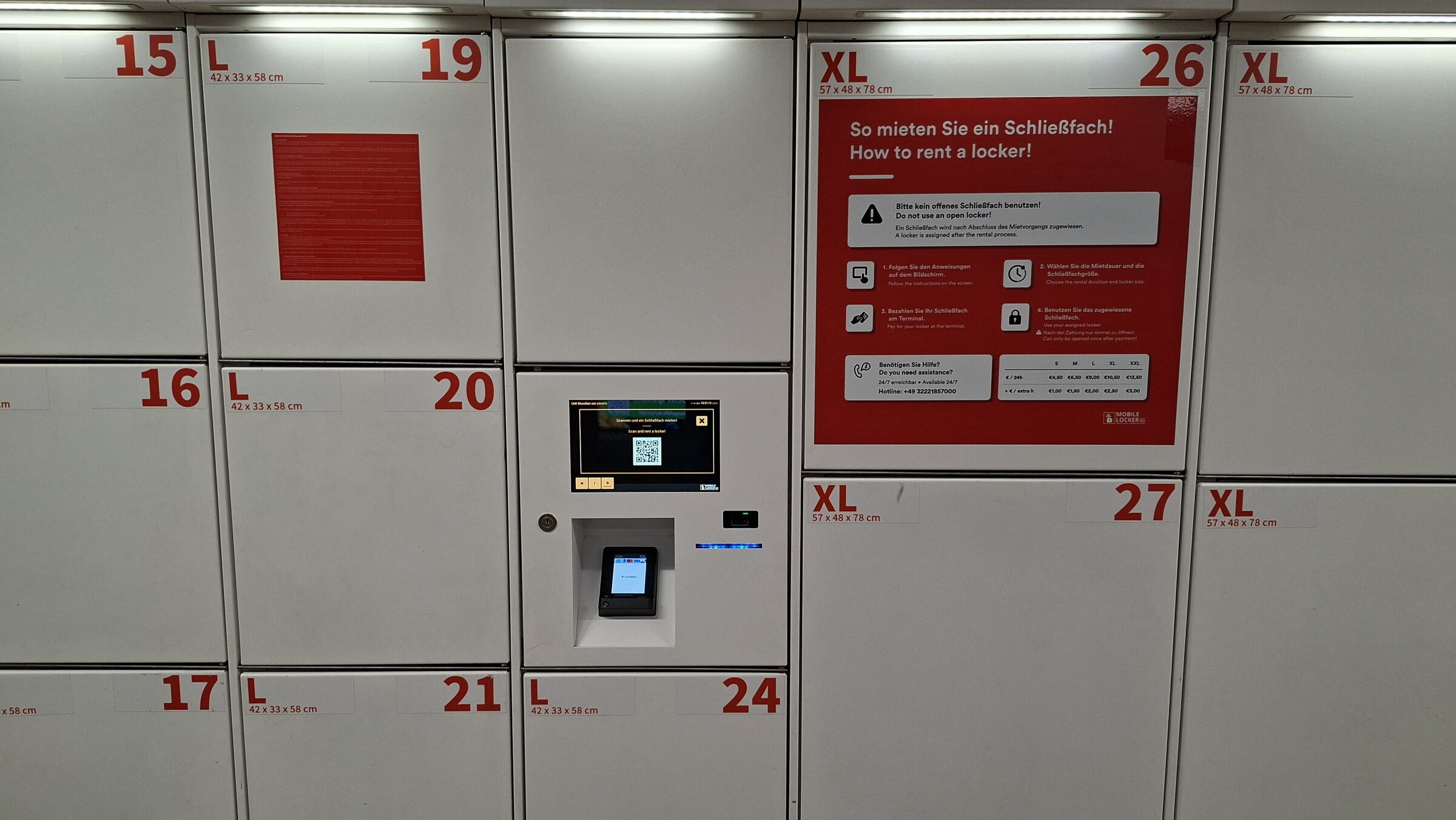
The machines were recently upgraded to accept card payment, not just coins — worth knowing if you've been avoiding them because you didn't want to carry change.
MyRadl bike-sharing & guided bike tours
Munich's bike-share system got a relaunch in May 2026: MyRadl, run by nextbike in partnership with MVV, replacing the old MVG Rad. You'll find classic bikes and e-bikes at around 1,000 stations across Munich and the wider region. A classic bike runs 1 €/30 min with a 9 € day rate; an e-bike is 3 €/30 min with an 18 € day rate. If you already have a valid MVV or Deutschland-Ticket subscription, your first 30 minutes on a classic bike is free (1.50 € on an e-bike) — a nice bonus if you've already got one for the transport reasons above.
Book through the MVGO app or nextbike's own app — a one-time registration is needed before your first ride.
Prefer a guided ride? Companies like Mike's Bike Tours run city tours (meeting at Marienplatz) covering the old town, the Englischer Garten and a stop at a beer garden, plus straight bike rentals by the half-day, full day or longer if you'd rather explore solo.
One hard rule wherever you ride: you cannot cycle through Munich's old town pedestrian zone — Marienplatz, Kaufingerstraße and Neuhauser Straße are under a strict cycling ban, and it extends to any sidewalk not explicitly marked as shared. Route around the edge of the Altstadt instead of through it: along the Isar toward the Englischer Garten and the Eisbachwelle, or out along the Nymphenburger Kanal to the palace, are both far more pleasant on two wheels anyway.
Travelling with kids, a dog, a bike or a scooter
Kids: under 6, they travel free and you can bring as many as you like — they just need to be with an adult if they're not yet school age. From 6 to 14, most of the common tickets already cover them: a Single-Tageskarte, Monatskarte or Wochenkarte lets you bring up to three children along free of charge (yours or not — weekdays this kicks in at 9:00, weekends and holidays it's all day). Without one of those, a child's single ticket is 2 € and a Kinder-Tageskarte is 3.80 €. On a Gruppen-Tageskarte, two children count as one adult toward the five-person limit.
A dog: your first dog travels free, no ticket needed. A second dog needs a child's single ticket (a flat 2 €). A small dog in a bag or carrier always travels free. Dogs must be kept on a short lead at all times, and dangerous breeds are not permitted on board at all.
Your own bike: it needs its own ticket (a Fahrrad-Tageskarte), and it only travels on the U-Bahn, S-Bahn and selected regional trains — not on buses or trams. It's also blocked during rush hour: weekdays 6–9 on the S-Bahn, and weekdays 6–9 plus 16–18 on the U-Bahn (both exceptions lift during Bavarian school holidays). A folded bike counts as luggage and skips all of this.
A scooter: standard two-wheeled e-scooters (the Lime/Bird kind) are banned outright on Munich's U-Bahn, trams and city buses — and the ban extends to the U-Bahn stations themselves, not just the vehicles. On the S-Bahn and regional trains, folded e-scooters are allowed. If you're relying on a shared scooter for part of your trip, plan around this rather than assuming you can bring it on board.
Once your city tickets are sorted, day trips out of Munich run on a different ticket altogether — see our separate guide to the Bayern-Ticket and day trips from Munich for the regional side of things.
Useful links
If this guide helped, you can say thanks with a train ticket.
Buy me a train ticket Buy me a train ticket
More in Munich & Surroundings
Trains in Bavaria: Bayern-Ticket & Day Trips from Munich
There's one ticket I reach for on almost every trip in this guide: the Bayern-Ticket. Here's exactly what it covers, when it actually kicks in, how the price drops with every person you add, and the one lookalike ticket at the machine that's worth knowing the difference from.
Renting a Car in Bavaria: What You Actually Need to Know
I don't rent a car when I'm in Bavaria — every trip on this blog gets there by train — but plenty of readers travel with family, gear, or a schedule that public transport just doesn't match. So here's everything I'd want to know before renting one here, checked against the actual rules rather than a rental company's fine print.

How I Plan a Day Trip in Bavaria (and What's Always in My Backpack)
People ask me more often how I plan a random Tuesday trip than which trail to take. So here it is — everything that goes in my backpack before I leave the house, the apps I actually check the night before, and a few things I only learned because I got them wrong first.
New trips, straight to your inbox
No spam. Just the routes, how to get there by train, and the best time to go.
By subscribing, you agree to receive the Haki Travels newsletter. We'll send you one email to confirm your subscription, and you can unsubscribe at any time. Privacy Policy