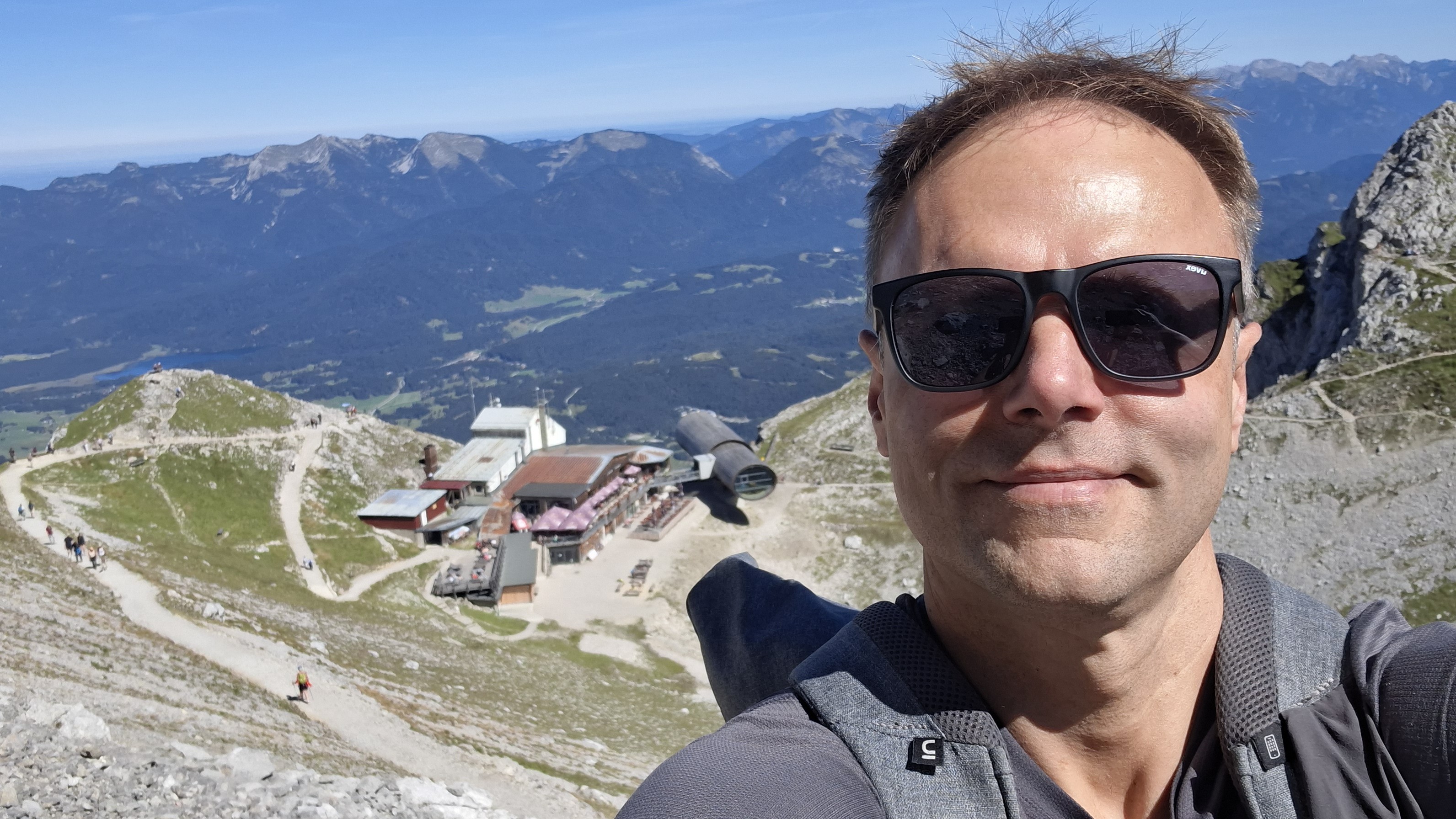
Practical Bavaria · Munich & Surroundings
How I Plan a Day Trip in Bavaria (and What's Always in My Backpack)
Personally visited by Martin · 8 October 2026
People ask me more often how I plan a random Tuesday trip than which trail to take. So here it is — everything that goes in my backpack before I leave the house, the apps I actually check the night before, and a few things I only learned because I got them wrong first.
How I actually plan the night before
Weather decides almost everything for me — I'd say it's a good 50% of the whole plan, which is a slightly embarrassing amount of life to hand over to a radar app, but here we are. I check Weather & Radar, mostly the radar itself, to see not just whether it'll rain, but roughly when and where the sky will actually clear up. The point isn't just "dry or wet" — it's timing the summit or the viewpoint for the window when it's actually clear, because by the time you've hiked up, the weather you checked that morning may already have moved on.
Beyond the weather, there's a little mental checklist running before I commit to a hike. How long it'll take to get there and back matters almost as much as the hike itself, especially if I've got something on in Munich that evening. I also check whether there's a faster way down — a cable car, say — and what it costs; most of the time I just walk up and down, but if I want to fit in more for the day, I'll weigh different combinations so I see more and still have real time to relax at the top. And once the days get shorter, in autumn and winter, an earlier sunset eats into the usable hiking window quite a bit, so that goes into the calculation too.
Trains are the other half. Within Munich itself I use MVGO for the public transport; once I'm heading out of the city, I switch to DB Navigator, which I use for two things most people don't think to check: the connection itself, and how full it's likely to be. If a transfer is under about 7 to 10 minutes, I'd rather avoid it altogether and look for a different connection. There's a running joke anyone who visits Germany ends up hearing about famous German punctuality — except it hasn't really held up for a while, and the last couple of years especially have gone downhill. The honest reason behind it, though, is that the country's been investing heavily in rail infrastructure lately, which in practice means a lot of closures and slow-running sections right now. So when I do end up risking a tighter transfer anyway, I already have a Plan B in mind before I even leave: if I can't make the original connection, I switch to a shorter stop on the same line instead of trying to force the original plan to work.
One habit that's saved me more than once: before I leave, I take screenshots of the full connection — the transfers, the platform changes, and the return journey too — so that if mobile internet drops out along the way, I'm not trying to hold the whole itinerary in my head or stuck without signal exactly when I need to check it.
I ride on a Deutschland-Ticket myself these days, but if you're using a Bayern-Ticket for a single day trip, remember it's only valid from 9:00 on weekdays (any time on weekends). There's a workaround if your train leaves earlier — a friend of mine once rode to the edge of her Munich transit zone on her own weekly pass, bought a short separate ticket for the next stop or two, and only then switched over to the Bayern-Ticket once it was valid. It's a bit fiddly, but it works if an early train is the only option.
One more thing that's easy to overlook: mobile coverage. I switched from Vodafone to Telekom specifically because coverage on regional trains was so much better — Germany still has real gaps, and in some areas it genuinely doesn't matter which provider you're on. If you're looking at a cheap plan, it's worth reading past the headline price before you commit — a great deal that drops you to zero bars the moment you hit a valley isn't actually a great deal.
Getting on the train — a few quirks nobody warns you about
I try to get to the platform at least 15 minutes early, sometimes earlier, even if it means standing around looking slightly too eager. It depends a bit on the train itself — one running late will often only pull in shortly before departure, no matter how early you are — but a train starting its journey at a terminus station, like Munich Hauptbahnhof, is often already sitting there up to half an hour early, and people board and settle in well before it actually leaves. That's the window worth catching: if you're travelling as a group and want to sit together, or need a table, being early actually matters.
Two more things I've learned the inconvenient way. First: on longer routes, check the toilet situation mentally before you board, because it's fairly common for the onboard WC to simply be out of order — on a short train with no other carriage to walk to, that's not a small thing, and it's not a conversation you want to be having with yourself forty minutes into the journey. Second: some trains run coupled together as two separate units that split later and head in different directions. I once got on the S1 toward the airport without checking closely, not realising the front carriages only went as far as Freising while the rest continued on to the airport. Newer trains show the carriage's actual destination on a screen inside; on older ones, don't be shy about just asking someone.
What's always in my backpack for a hike
The bag itself. Mine is a grey Quechua rucksack from Decathlon, and the colour is deliberate — it just doesn't show dirt the way a lighter one would. The bottom is rubber and wipes clean in seconds, which matters more than it sounds like after a muddy trail. I've been using this exact model for over four years now — when the first one eventually wore through, I just bought the same one again about two years ago, because it's simply that good. It's also the same bag I use for the office or an extended weekend away, since it actually fits more than my dedicated hiking backpack does — enough for two or three nights away, including my orthopedic pillow, rolled up and held together with a couple of elastic bands. I've had that pillow even longer than the bag, and I really don't sleep well without it, so it travels with me wherever I go, extended weekend or not. I do own a proper hiking backpack too, and it has the ventilated back panel mine doesn't — a real advantage on a hot, sweaty climb — but between the two, the Quechua is the one that actually comes with me most of the time, simply because it swallows more gear.
Sun and weather. A foldable cap and sunglasses — Alpine sun is deceptively strong, it'll catch you even without direct sunshine, and I've been sunburnt on days that didn't feel hot. Sunscreen. A packable rain-and-windproof jacket, which earns its place the hard way: I once reached a summit in full sunshine, hadn't bothered bringing a jacket, and found a brutally cold wind waiting at the top. I couldn't enjoy the view and ended up hurrying straight back down. A multifunctional buff I pull over my head to protect my neck — doubles as a headband, and it's useful again once autumn turns cooler.
Clothing. Decathlon zip-off trousers that convert to shorts when it's warm and dry fast if they get wet — I won't hike without them. A fleece on top of that, which isn't just for the summit: German trains sometimes blast cold air conditioning right over one shoulder near the window, strong enough that you lose feeling in it, and the fleece doubles as a makeshift shoulder cover. A spare t-shirt to change into once I reach the top, because the climb up usually leaves the first one soaked. During the spring and autumn shoulder seasons I'll also throw in a long-sleeve thermal top alongside that spare t-shirt — just in case the weather turns colder than planned.
Footwear and traction. My hiking boots are nearly 14 years old, from Zakopane, and still going — but they need enough room for an extra sock, and after a long, steep descent my toes can genuinely hurt, badly enough on one occasion that I almost didn't make it to the train, partly because I was also racing to catch the last bus down. After slipping on snow near a summit one spring — fine going up, much less fine coming down — I went to buy microspikes (the kind that just clip straight onto your boots) the next day and found them sold out for the season. I changed that particular route rather than risk it. I'm also looking at swapping my current trekking poles for a foldable pair — the ones I have stick out of the backpack awkwardly — and worth knowing if you fly: poles aren't allowed in carry-on, they have to go in checked luggage.
When I don't feel like lacing up the hiking boots, I'll quite happily do a trail in a pair of black memory-foam sneakers instead — they're really running shoes rather than hiking shoes, but they're light and comfortable, and I've done dozens of hikes in them by now without issue. The one thing I'm still looking to fix is the front of the shoe — it's just not built for hiking the way a proper boot is, so wet grass in the morning dew, or any real rain, and water gets through to my feet within minutes. It just doesn't happen often enough that I've gotten around to replacing them yet.
Comfort. A small foldable seat cushion from Decathlon, so I can sit down anywhere at the top — wet ground, a cold bench, doesn't matter. This came directly out of the jacket story above: once I realised how much a bad few minutes at a summit can ruin the view, I started carrying things that let me actually stay and enjoy it. These days, if the weather's good and I've got everything I need with me, I'm happy to stay at the top for a couple of hours rather than the 10 or 15 minutes I used to give it. I'll just sit there — thinking things through, working out what I could be doing better or more efficiently, listening to a podcast, practising my German with an AI, or planning the next article for the blog.
Power and navigation. Bluetooth headphones are a genuine must for me — at least 4 to 6 hours of battery — loaded with downloaded music, podcasts, and a couple of videos, because mobile internet is often unreliable on the road, especially once you're up in the mountains, and streaming anything just isn't an option there. Then there's the power side: I started with a 30,000 mAh fast-charging powerbank, heavy enough that I now also carry a lighter 10,000 mAh version depending on the trip, plus a data cable at least 1.5 metres long, because whoever designs train carriages seems to place the sockets somewhere you practically have to hold your phone in the air to reach. For offline maps I use Mapy.cz: free offline downloads, one country at a time, covers the whole world country-by-country, works fine in English, and it's actually more reliable than Google Maps once you're somewhere with weak signal — the only catch is swapping the downloaded country each time you cross a border. I also keep Bavaria downloaded offline in Google Maps as a backup, just in case, and I have AllTrails and Komoot installed too, for the same reason — but Mapy.cz is what I actually reach for day to day.
Payment. Cash, a card, and — this one bit me recently — actually remembering your card's PIN. A cable car ticket machine once flatly refused contactless and wanted chip-and-PIN only, and since almost everything these days goes through my phone, I genuinely had to dig the number out of memory.
Food. Water (1 litre), a small pack of almonds or mixed nuts, and a protein bar — the DM ones are good value for the protein content, though fair warning, the wrapper sometimes welds itself to the bar after a while and getting it open takes more patience than it should. And, entirely optional but very on-brand: a small insulated pouch with two ice packs that fits two bottles of beer, for a properly cold one at the top even in full sun. For beer lovers only. I also keep a foldable tote bag in there — mostly for whatever I end up carrying back, but every so often, if I'm lucky, for wild mushrooms I spot along the way.
When it's a city day instead
Picking a city works a bit differently. I'll first look at what the place actually looks like — whether it has a castle, a chateau, some significant landmark, a nice historic old town — and once that looks right, I plan the train journey around it.
A few things change when the plan is a town, a castle, or an afternoon wandering rather than a trail. A proper umbrella — small and foldable, but I genuinely always have it on me, more useful for city sightseeing than almost anything else in the bag. I also carry one of the small single-use rain ponchos, the kind you'd get handed on a bus sightseeing tour — a lightweight backup alongside the jacket and umbrella. And a foldable tote bag, for anything I end up buying along the way.
On a city day, the seat cushion still earns its place — I'll often look for a spot as close to the river as I can get and just sit there for a while. And through summer I'll pack a quick-dry towel and swimwear just in case, so that if the day ends with a chance to cool off in a lake, I'm actually ready for it. One more small but properly useful one for city days: the Where is Public Toilet app, for exactly the moments you'd expect.
My own ritual before I even get there
Coffee I drink on the train. Food usually waits until I've actually arrived — the town centre, a park, the base of a castle. My regular stop is Yormas, a bakery kiosk chain you'll find at various German train stations — mine is at Munich Ostbahnhof. My order barely changes these days: two Pfeffer-Brezn, one with Camembert and one with Obazda, plus a white cookie with macadamia and a dark one with mixed chocolate. I used to get a plain Schnittlauch Brezn alongside the Camembert one, but once Yormas added the Obazda version to the menu, that took its place instead. If I haven't managed to bring coffee from home, their double espresso is a couple of euros and genuinely holds up — no reason to pay a lot more somewhere else for an espresso that turns out sour, when I'd rather have something properly bitter. On the way back, I'll sometimes pick up a regional beer from a station kiosk — the kind you can't actually find in Munich unless you track down a specialist beer shop.
The short version
If none of that stuck, here's the condensed version: check the weather radar, check DB Navigator, and screenshot the connection before you leave. Download everything you might need offline — maps, music, podcasts — and make sure the powerbank actually has charge, not just a place in the bag. Carry a card, remember its PIN, and keep at least €50 in cash, because sooner or later some machine in the mountains will only take one of the two. Throw in a foldable rain jacket and a fleece even if the forecast looks perfect — summits have a way of ignoring the forecast. Beyond that, pack like you're planning to actually enjoy yourself rather than just survive the day — a seat cushion and the right snacks have saved more of my hikes than any piece of "proper" gear ever has. Everything above is just the fine print — but it's fine print I've paid for the hard way, so you don't have to.
Useful links
- Weather & Radar — App Store (iOS)
- Weather & Radar — Google Play (Android)
- MVGO (MVG) — swm.de
- MVGO — App Store (iOS)
- MVGO — Google Play (Android)
- DB Navigator — bahn.de
- DB Navigator — App Store (iOS)
- DB Navigator — Google Play (Android)
- Mapy.com (Mapy.cz)
- Mapy.com — App Store (iOS)
- Mapy.com — Google Play (Android)
- AllTrails — App Store (iOS)
- AllTrails — Google Play (Android)
- Komoot — App Store (iOS)
- Komoot — Google Play (Android)
- Deutschland-Ticket
- Bayern-Ticket
- Where is Public Toilet — Google Play (Android)
If this guide helped, you can say thanks with a train ticket.
Buy me a train ticket Buy me a train ticket
Quick facts
- Region
- Munich & Surroundings
- Access
- Bavaria-wide — this guide covers day trips across the region, not a single spot
- Distance
- 0 km from Munich
- Cost
- Best months
- Year-round — pack for the season and check the radar the night before.
- Crowds
- medium crowds (my assessment)
Where it is
Bavaria, Germany
Weather
Full forecastMore in Munich & Surroundings
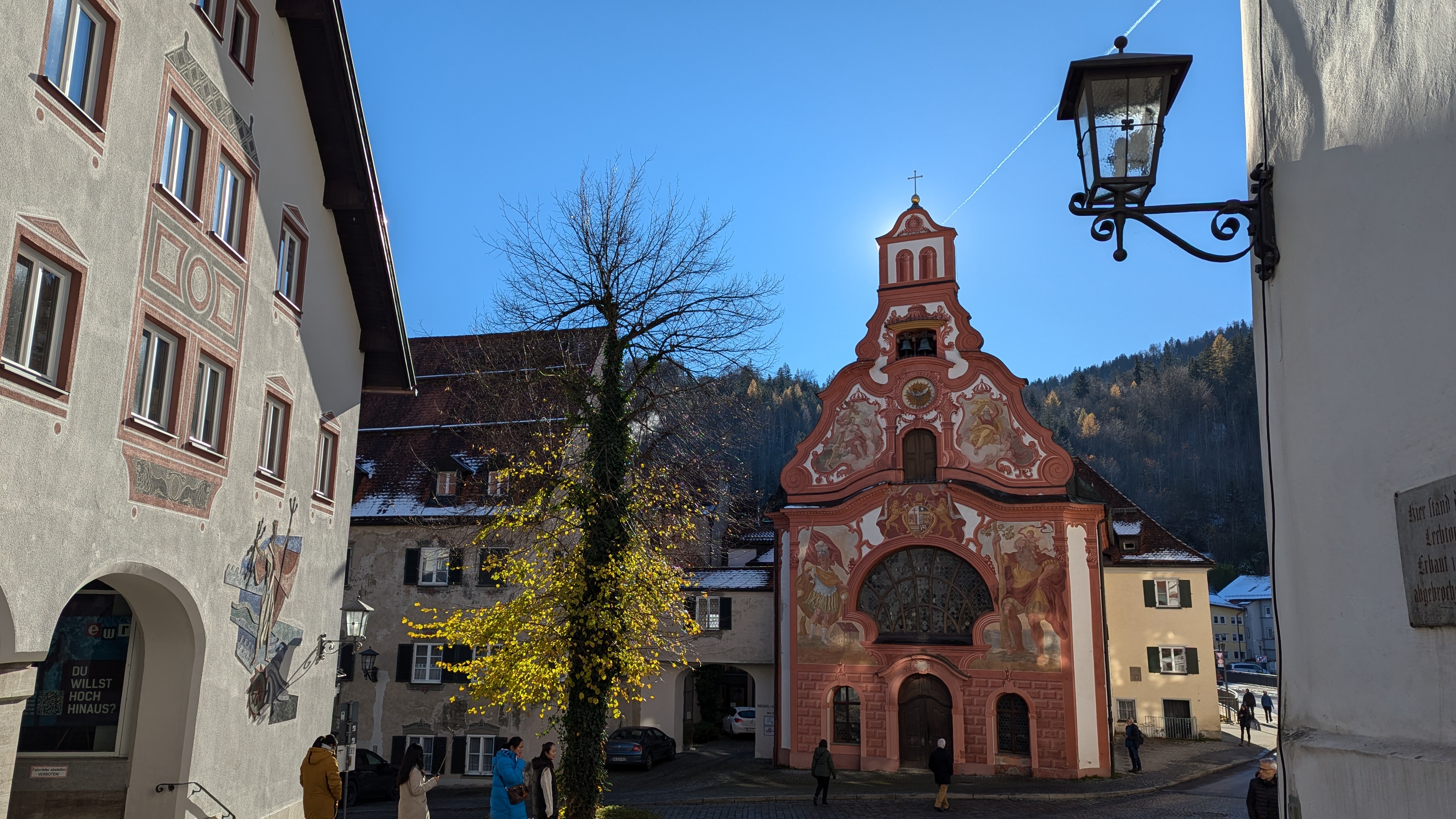
Renting a Car in Bavaria: What You Actually Need to Know
I don't rent a car when I'm in Bavaria — every trip on this blog gets there by train — but plenty of readers travel with family, gear, or a schedule that public transport just doesn't match. So here's everything I'd want to know before renting one here, checked against the actual rules rather than a rental company's fine print.
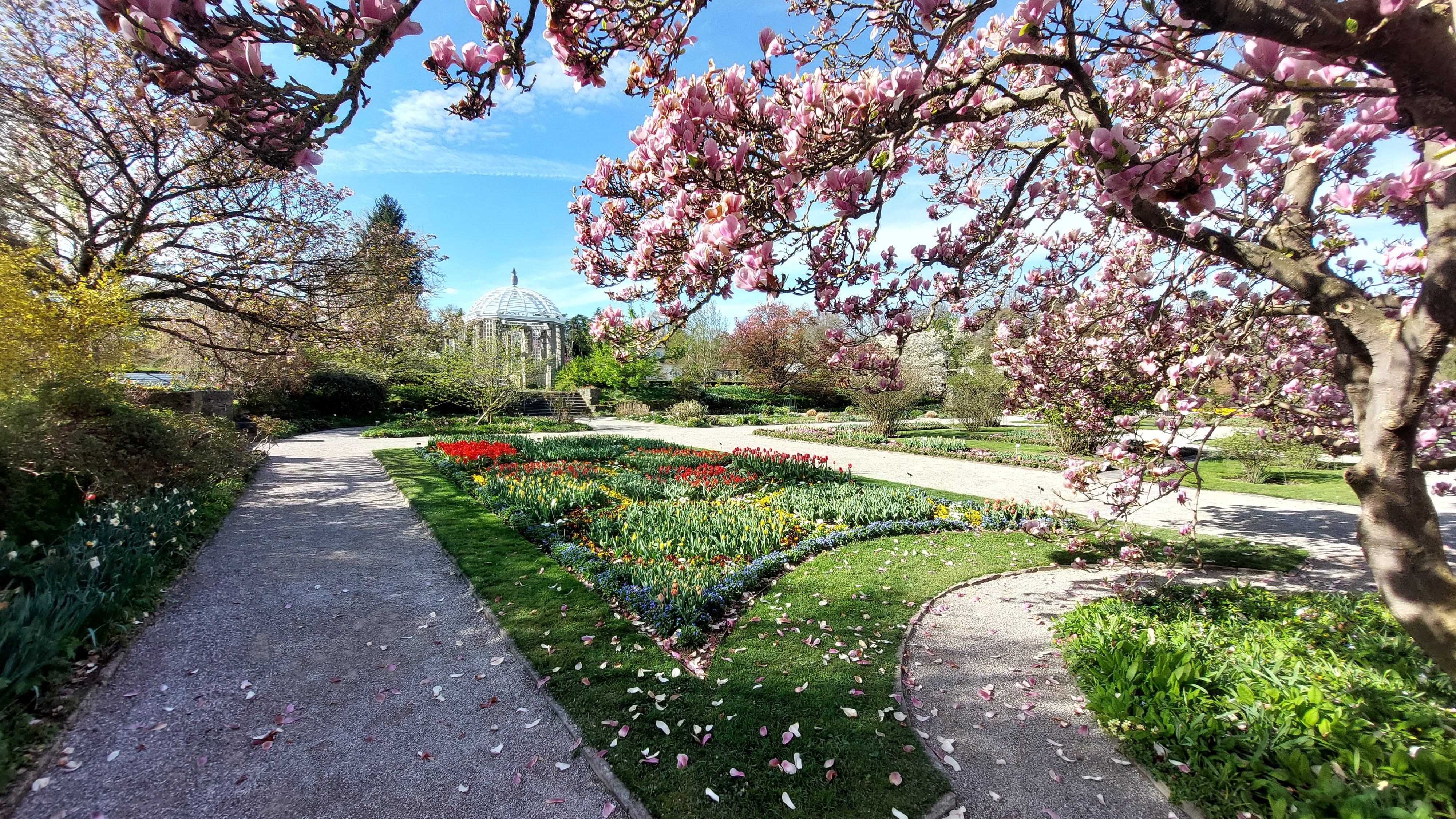
When to Visit Bavaria: A Season-by-Season Guide
I've now hiked, eaten, and trained my way across Bavaria in spring, summer, and autumn — Bamberg in May, Eibsee and the Zugspitze in June and July, Karwendelbahn and Rotwand in September. Every season here looks like a different country. Here's what actually changes, month to month, based on what I've seen myself plus what I checked to fill the gaps.
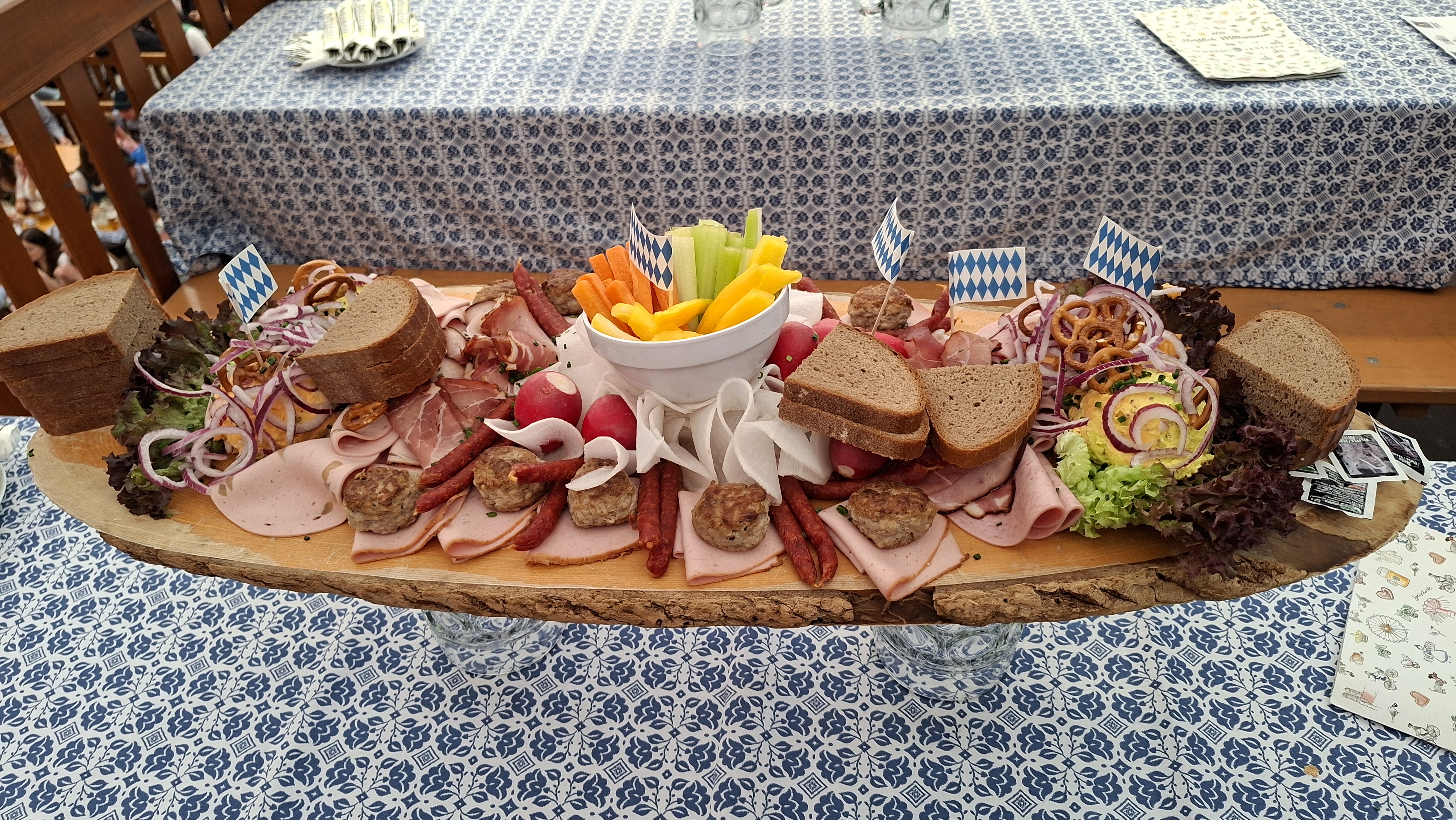
Food & Drink in Bavaria: What to Actually Order
I've eaten my way through the Bavarian classics by now (Weißwurst the proper way before noon, Schweinshaxe, Kaiserschmarrn at a mountain hut after a hike, Obazda with a fresh Brezn) and worked through most of the beer list too, from a Helles straight out of the barrel at Augustiner to a Maß of Festbier at Oktoberfest. Here's what's worth ordering, how the beer gardens work, and why the rules are stricter than they look.
New trips, straight to your inbox
No spam. Just the routes, how to get there by train, and the best time to go.
By subscribing, you agree to receive the Haki Travels newsletter. We'll send you one email to confirm your subscription, and you can unsubscribe at any time. Privacy Policy