Practical Bavaria · Munich & Surroundings
Where to Stay in Munich for Day Trips by Train
Personally visited by Martin · 21 November 2026
I spent three and a half years at a hotel front desk near Munich's Ostbahnhof. Here is how I would choose where to sleep for day trips by train, and what to check before you book.
In April 2010 I got stuck in Munich. I was living in the UK and working for the Slovak Centre in London, and a colleague and I had come to Munich for a youth exchange project together with the Slovak community here. Then the Icelandic volcano shut down the skies. Our Ryanair flights were cancelled, so we quickly bought new tickets with Air Berlin (an airline back then, not the city), landed somewhere in Germany a few hours by train from Munich, and carried on by train.
We stayed in a very basic three-star hotel near the Hauptbahnhof, in a district full of Afghan, Iranian and Middle Eastern shops and restaurants, and full of other three-star hotels. On Saturday we went to the Frühlingsfest on the Theresienwiese. It was the first time I had a big mug of beer, I danced on a bench, and the atmosphere was great. After that the hotel could not accommodate us any longer, and an acquaintance from the local Slovak community took us in for two nights.
Getting home was its own project. Flights, trains and buses were stopped or sold out "for a week", and my colleague had to be at work on Monday morning. In the end we found someone who was willing to drive over from London like a taxi. He arrived on Sunday, we went back by car and ferry, and we were in London around six on Monday morning.
What I took from it: your hotel is not just a bed. It is where you stand when the plan falls apart. That is why I think differently about where to sleep now.
The short answer
If you want to explore Bavaria by train, stay near a station where your trains depart, and pick a hotel close to the exit of the S-Bahn or U-Bahn. In my view that means the Hauptbahnhof or the Ostbahnhof, and if you want to save some money, I would look at the Ostbahnhof first: the connection is excellent, both to the centre and to the airport. A pretty, quiet street matters less than walking out of the door and being on a train a few minutes later. Aim for about €100 a night, treat €150 as the ceiling, and spend what is left on food. Munich has a lot of good restaurants, many of them international and well rated.
I have lived in Munich since 2023, and I spent three and a half years at the front desk of a small hotel at the Ostbahnhof. This guide comes from that, plus my own stays in Munich hotels. Where something is only true for the hotel where I worked, I say so.
Why the station matters when you travel by train
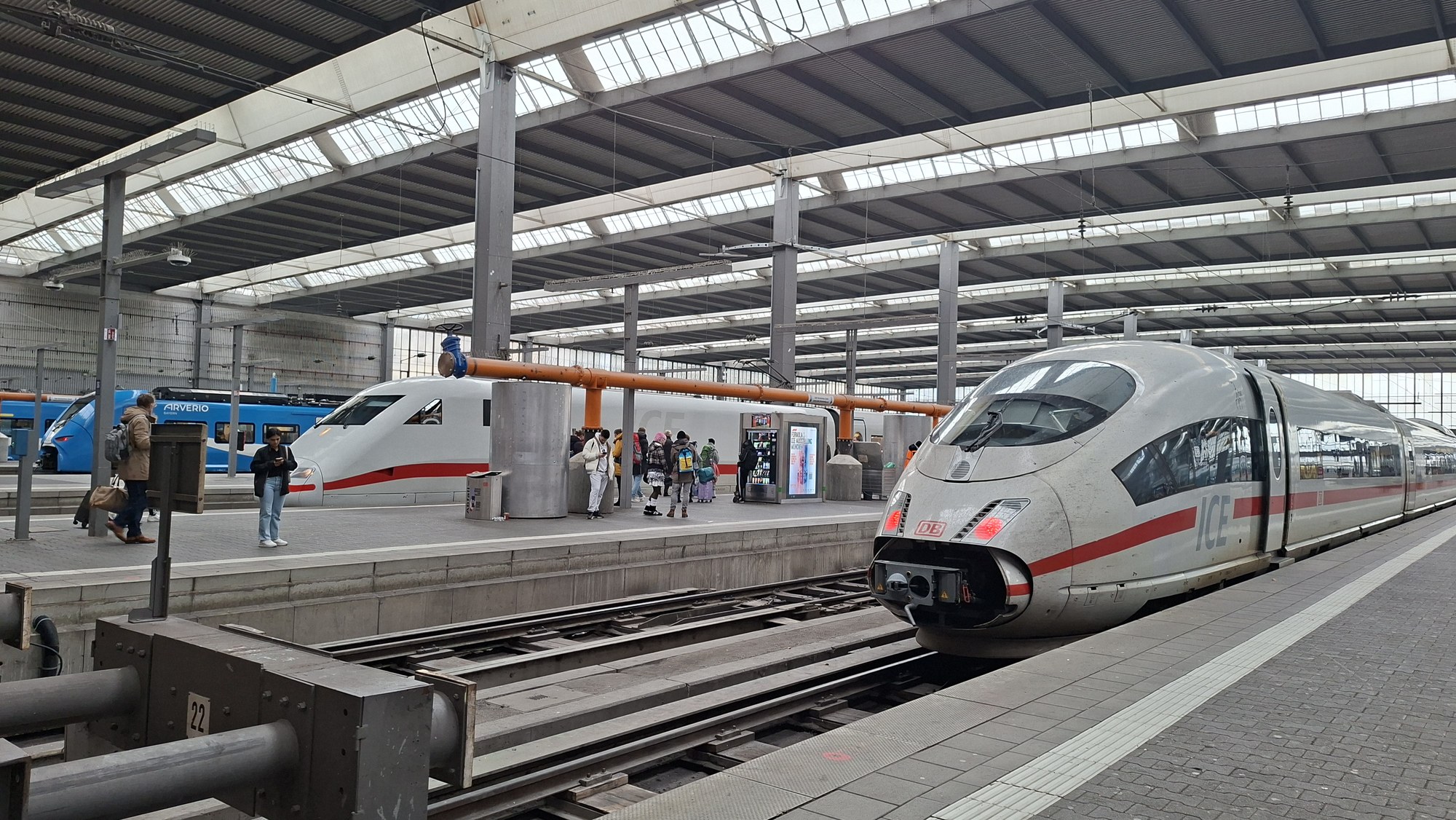
The Hauptbahnhof is a terminus with 32 platforms, and the S-Bahn runs underneath it. Most of my day trips start there: Zugspitze, Rotwand and Königssee. Wendelstein is the exception, because that one starts at the Ostbahnhof. The Ostbahnhof is served by all S-Bahn lines except the S20, and by trains to Salzburg and Vienna. For tickets, Trains in Bavaria covers the Bayern-Ticket, and Getting Around Munich explains how to get around inside the city.
The Ostbahnhof has one more advantage if you want to go to Salzburg. The regional train RE 5 stops at München Ost on its way from the Hauptbahnhof to Salzburg Hbf, so you can board there and skip the trip to the Hauptbahnhof. A Bayern-Ticket is valid all the way to Salzburg Hbf, but not on Salzburg's city buses. Guests of my hotel did exactly this: they bought a group ticket, for example a Bayern-Ticket, and got on and off at the Ostbahnhof, which saved them the trip to the Hauptbahnhof and back, almost three quarters of an hour in all. I always added that if you definitely want a seat, it is better to start at the Hauptbahnhof and get there early to claim one, and on the way back you get off at the Ostbahnhof.
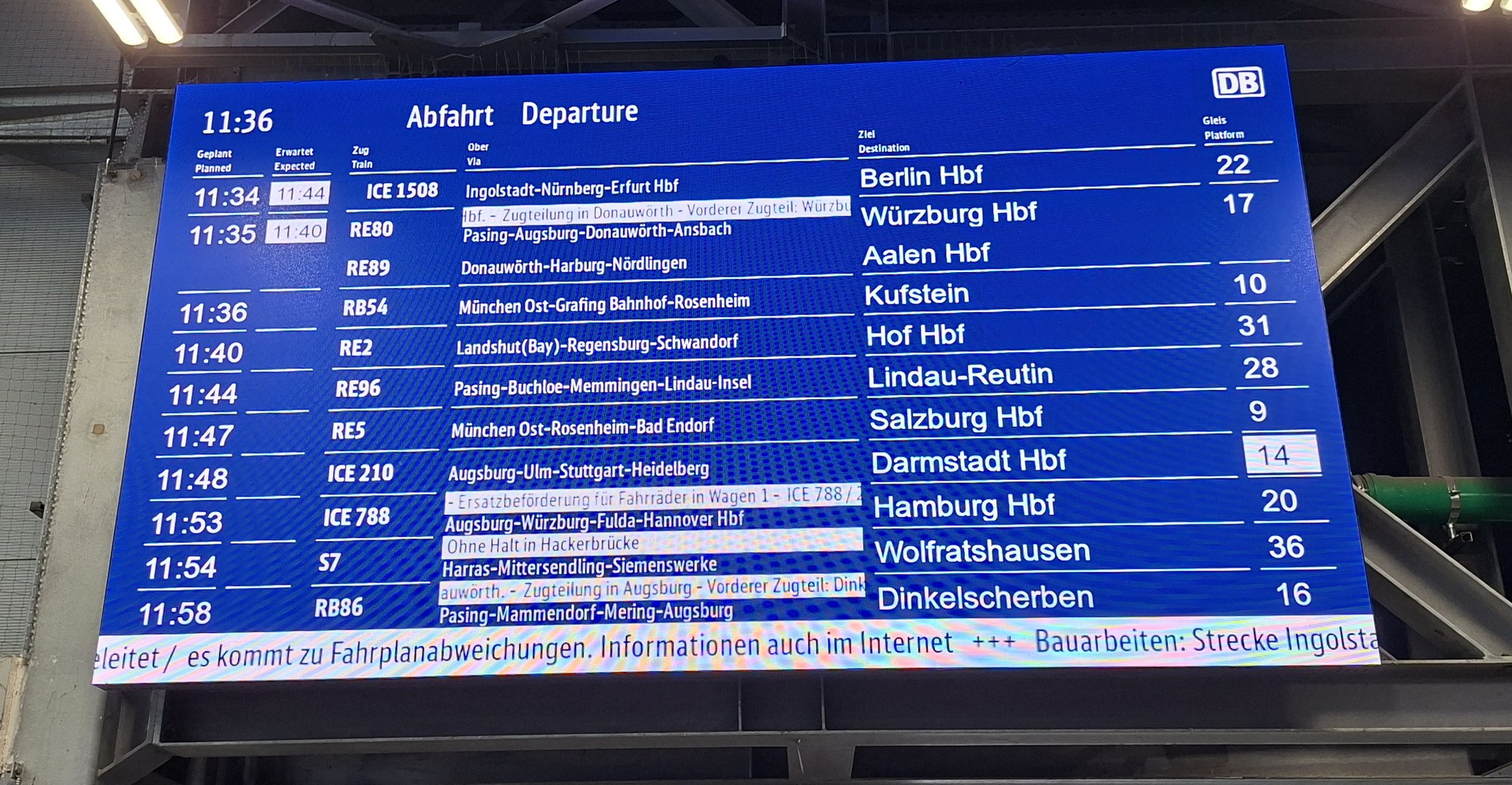
One thing to plan for: the S-Bahn does not always run on weekends. One Saturday morning I could not get from the Ostbahnhof to the Hauptbahnhof because of an S-Bahn problem, and I missed a group hike. Weekends often mean works on the S-Bahn network, and a second tunnel under the city centre is not expected to open before 2035 (the city says 2035 at the earliest, and Deutsche Bahn has talked about 2035 to 2037). So check the day before and again in the morning, leave a buffer, and know what the U-Bahn alternative is.
And one habit on German trains: people often arrive early and are already sitting 15 to 20 minutes before departure. If you want a seat on a busy regional train, be on the platform about 20 minutes ahead.
I would also choose a stop where the S-Bahn and the U-Bahn both call. They are run by different companies. In my experience, when one of them strikes, say Deutsche Bahn, which runs the S-Bahn, the U-Bahn keeps running, and the other way round. During the MVG strikes in March 2026, MVG said the S-Bahn and regional trains were not on strike. Check the current situation on muenchen.de and mvg.de before you travel, but if you stay where both systems meet, you have a fallback.
Where to stay: Hauptbahnhof, Ostbahnhof or the centre
Hauptbahnhof. There are very many hotels of every kind here, and everything is in one place: the S-Bahn, the U-Bahn, regional trains and the bus to the airport. It is busy, with many people and many nationalities. Around the station you will also see homelessness and some crime. For a cheap option, my sister-in-law stayed in a hostel near the station in July 2025 while she was in Munich for a training course, in a room for four to six that she shared with a colleague. The furniture was old school, but it was clean, and the bathroom was small. It cost about €50 to €60 a night for the two of them, with breakfast. That is one summer, so treat it as a rough guide.
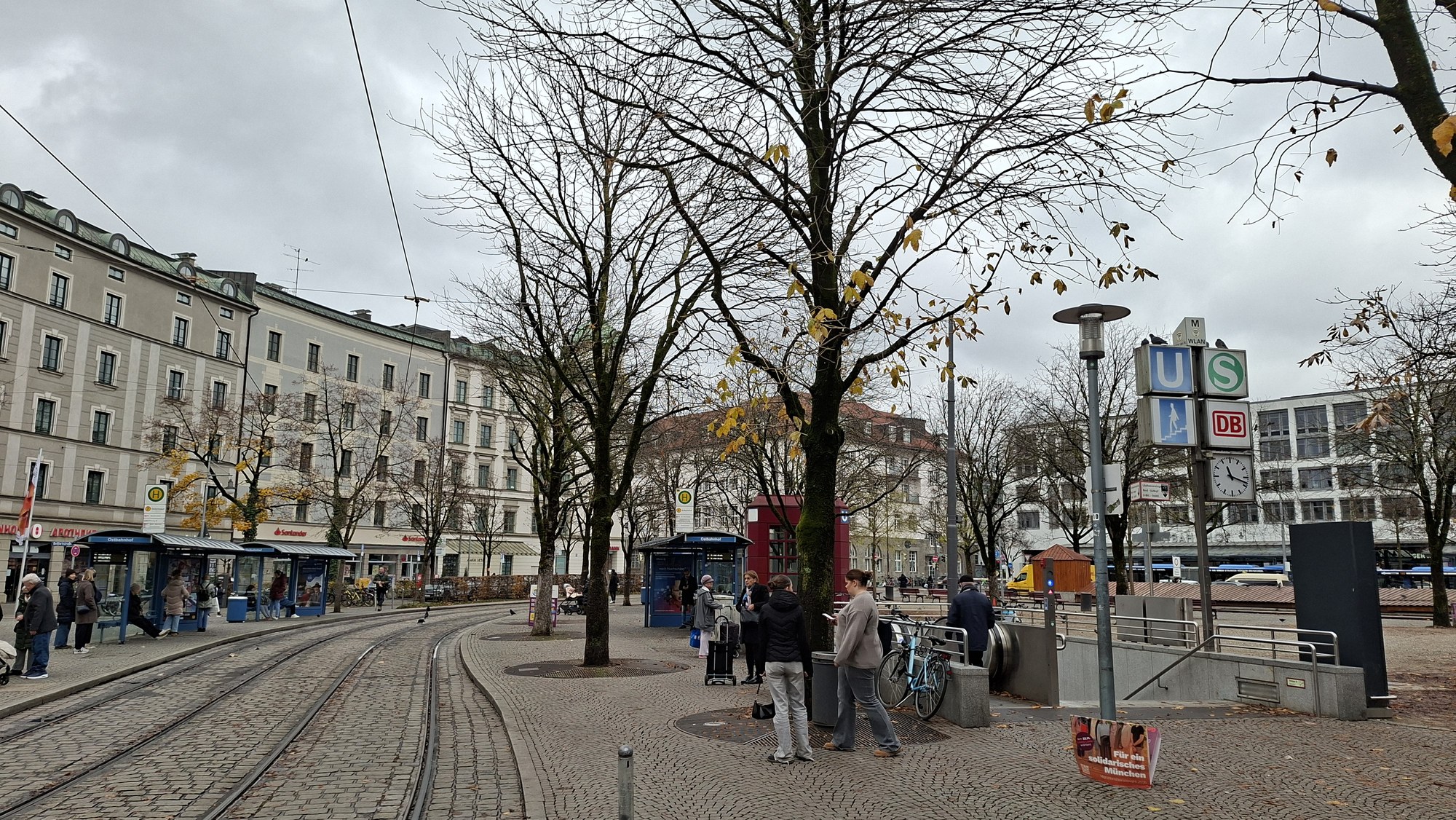
Ostbahnhof. This is my own area, and if you want to save money, it is where I would look first. The connection is excellent, both to the centre and to the airport: the S-Bahn, the U-Bahn, trams and buses all at the exit, and the S8 to the airport. From the Ostbahnhof you are at the Hauptbahnhof in about 7 minutes on the U5, or about 9 minutes by S-Bahn. The hotel where I worked had the best position: right outside the station exit, with the tram, buses, the bus station, the S-Bahn and the U-Bahn in front of it. Many business guests stayed there during trade fairs on weekdays. The area has changed a little in recent years, though: more homeless people spend time in the park in front of the station, and the evenings can be louder, sometimes with singing and alcohol. Still, it is an interesting place to stay, mostly for the connections.
The centre. Most visitors want to stay around Marienplatz, and if you can afford it, it is lovely. Be aware that the centre is largely a pedestrian zone. Before you book, look at exactly where the hotel is and how you get there with luggage, because taxis and cars have to take a detour. Also check whether the hotel has air conditioning: in summer, if you walk through the centre, around the Viktualienmarkt for example, where there are a few hotels too, you can see that all the rooms have their windows open to cool down a little, and then they get the noise from the street.
Whichever you choose, look at where the exit of the S-Bahn or U-Bahn is compared with the hotel door. With a suitcase, that last stretch is what matters. Many guests took a taxi to the airport because of their luggage and paid more than €100, because they did not feel like crossing the road, finding the platform and so on, even though they would have saved as much as €80.
Budget: what it costs and when it spikes
Munich does not charge a city tax at the moment (checked on 21 November 2026). Bavaria forbids it, the Bavarian Constitutional Court rejected the cities' complaint in November 2025, and the city of Munich has said it wants to take the matter to the Federal Constitutional Court, so check before you book.
Prices jump around big events: Oktoberfest, trade fairs at the Messe, big concerts and big football matches. A travel portal compared the cheapest offers for 152 Munich hotels for the opening weekend of Oktoberfest 2026 with the weekend before. 143 of the 152 hotels cost at least twice as much, and the median price for a night went from €125 to €429. That is a sales portal's snapshot from one day, so use it as a feel for the size of the jump, not as a price list. Concerts do something similar on a smaller scale: when Adele played ten shows in Munich in August 2024, the average room price that month rose by about 47 percent, and on the first show night it roughly doubled.
My rule of thumb is to book early and with good cancellation terms, because otherwise a big event can cost you a lot. When to Visit Bavaria helps with the busy weeks.
At the hotel where I worked, the cheapest rates came without free cancellation, and that led to the hardest conversations I had at the desk. Guests who had paid the cheapest rate often asked for a refund after the deadline, for reasons such as a train strike, trouble at the airport or a family emergency. The hotel could not do much, because the rate they chose was clear. The flexible rates (for example, free cancellation until 6 pm on the day of arrival) cost more. If you are planning day trips by train, I would think about flexible cancellation terms, and check what your travel insurance covers. Some hotels may offer a voucher if you ask, but you can't count on it.
Getting to the airport
The S1 and S8 both go to the airport, and each runs every 20 minutes, so together you get a train about every 10 minutes. Both stop at the Ostbahnhof and the Hauptbahnhof, but they take different routes: the S8 runs through the east of the city, the S1 the long way round through the west. From the Ostbahnhof I would take the S8. From the Hauptbahnhof or Marienplatz the city says the ride usually takes about 40 to 45 minutes. The Airport-City-Day-Ticket costs €17.50 for one person (tariff from 1 January 2026), and €32.60 as a group ticket for up to five people.
The Lufthansa Express Bus runs every 20 minutes from the Hauptbahnhof (stop at Arnulfstraße 12, on the north side of the station) and takes about 45 minutes. A single ticket for an adult costs €12.50 online and €13.50 from the driver, and two bags and one carry-on are included. It is handy if your hotel is at the Hauptbahnhof and you do not want to take the S-Bahn with a suitcase. If you travel from the city to the airport, the operator says that at the moment you can only get off at Terminal 2 (checked on 21 November 2026), so look at the operator's page for the current situation before you go. A taxi from the Hauptbahnhof area has a fixed price of €96 (checked on the same day).
If you arrive by car
Hotel parking and the emission zone are the things drivers ask about most. Parking at the hotel is not always cheap or easy, so ask where the car park is, how to get in, and what it costs. Munich has a low emission zone that covers the Mittlerer Ring and everything inside it, and you need a green sticker to drive into it. According to press reports, since 1 October 2026 battery-electric cars, plug-in hybrids and fuel cell cars with an E-plate no longer need a separate sticker, but a car registered abroad without that marking still does. Check the rules for your car on the city's page before you come. If your car is registered abroad, the ADAC overview for foreign cars helps with the class of your car, and the city's page on stickers tells you how to get one (all in Useful links below).
Many guests drive an electric car or a hybrid, and they asked about chargers all the time. In the garage of the hotel where I worked there were two chargers. They did not belong to the hotel: a separate company ran them and the hotel only rented the space, so the hotel had nothing to do with how you charged and paid. So don't rely on "the hotel has a charger". Ask whether it is on site, who runs it, and how you pay.
A hotel outside the centre with free parking can be a good choice for a car. My brother's family stayed in a hotel like that in Moosach: parking was free and it was very clean, but it is on the S1, and the connection to the centre is slow: they needed about 50 minutes, first by bus and then by train. That is fine if you drive everywhere, but it is not what I would choose for trips by train. For more on driving, see Renting a Car in Bavaria.
Hotels without a reception
Some hotels have no reception at all, only a big machine, a bit like a cash machine. You do the check-in yourself, type everything in, get a card and hand it back at the end, and if you need anything, you message the hotel on WhatsApp. The hotel in Moosach worked like that. A week later I stayed in a similar hotel in Leipzig. The machine was on the mezzanine by the lift, it took quite a while to type everything in, and robot vacuums were cleaning. I had booked through a platform whose chat is the only contact, and I had written to the hotel in advance and given all my details, but I still had to enter everything again. I also could not get a company invoice through the platform. A hostel near the main station in Munich had a terminal as well, and it sometimes failed, for example by not finding the right nationality, and the person at the desk could not help much.
That is not a reason to avoid them. They can be clean and cheaper. Just expect check-in to take longer, bring your booking, ID and company details, and if you arrive late at night, with luggage, or need a company invoice, find out first whether there is a person at reception.
What to check before you book, and when you arrive
These are the questions I heard at the desk all the time, and I'd ask them before booking or on arrival:
Check-in and check-out. Where I worked, check-in was from 14:00 and check-out at 12:00. Other hotels differ, and some can do an early or late check-in, a small hotel more easily than a big one.
Reception hours and late arrival. This was one of the biggest questions, and guests were often stressed before they arrived. Many asked until when the reception is open, and when a train or a flight was late, they kept asking whether we were still there and how they would get in. Not every hotel has a 24-hour reception. Mine did, but that is not the rule. Before you travel, ask until what time the reception is open, what happens if you arrive later (how you get in and who you can call), and save the hotel's phone number on your phone. If your transport is delayed, tell the hotel early.
Luggage. Many hotels keep your bags before check-in and after check-out, but usually not for people who aren't guests. For station lockers see Getting Around Munich.
Breakfast. Ask when, how much, and what you get. Breakfast at my hotel cost €19 if you booked it in advance and €21 if you added it on the day of arrival, which is a lot, so guests asked what they got for it. Booking it ahead was a little cheaper. A bakery or café nearby is often a good alternative.
Payment. At the hotel where I worked we took reservations only with a credit card, to guarantee the booking. Guests could still pay for the stay in cash, but we needed the card for when something happens, for example damage, because we could not charge anything afterwards without it. There was one catch: if you chose a rate that could be cancelled free of charge until, say, three days before arrival, the booking had to be paid by card three days before, even if you wanted to pay in cash. The hotel did not want to carry the risk of whether you would show up or not. Only regular guests could get more flexible terms. That was our rule, not one for all hotels. Some guests cancelled their card after booking, and then the hotel could do nothing but ask them to pay before arrival. Ask before you arrive if a card is needed and how a cancellation is charged.
Booking platforms. A platform can guarantee payment to the hotel, but I saw several times that the hotel did not get the money, because the guest's card had not been checked. Booking directly is not always cheaper: hotels try to keep their own site cheaper, but the platforms run different discount programmes, so the hotel cannot always promise it.
Write to the hotel directly. For anything that matters (a late arrival, a quiet room, a lift, a dog, a company invoice), write to the hotel as well, by e-mail or WhatsApp from your confirmation, and not only through the platform's chat. It will not always save you from typing everything in again at a check-in machine, as I found in Leipzig, but then you have the hotel's answer in writing. How fast a hotel replies differs a lot, so write early.
A quiet room. Many guests asked for a quiet room, especially those who wanted the window open. Rooms facing the courtyard were the most wanted, and there were only a few. On the street side you hear trams, cars and, at the Ostbahnhof in summer, people on a Friday or weekend night.
Air conditioning. In Europe it is more the exception than the rule, and guests from the US and Asia are often shocked. My hotel had it only on the fifth floor for two summers, and some guests cancelled because of that. In two or three weeks of heat the rooms came close to 30 degrees, fans did not help much, and an open window means noise. Ask about the air conditioning in your room, not just in the hotel.
Restaurant, gym and where to eat late. Guests often asked whether we had a restaurant, and some asked about a gym. We had neither a restaurant nor a gym, and not every hotel has them, so check before you book. If you arrive at 18:00, 19:00 or 20:00, you'll want to eat soon, and many kitchens close at 21:30 or 22:30. Ask the hotel which restaurants still cook at 22:00. At mine we had a list.
Lift, wheelchair access, dogs, bikes, minibus or a taller vehicle. Guests asked me about all of these, by e-mail, by phone and at the desk, and the answer is different in every hotel. Ask in writing before you book: is there a lift, can a wheelchair get in, are dogs allowed, where can the bikes stay, and where can a minibus or a taller car park, and how high is the garage.
Company invoices. If you need one, ask in advance. It took a lot of work for us.
Haki tip: Sleep where the most trains leave. Pick a hotel at the exit of an S-Bahn or U-Bahn station, book with a cancellation option you can live with, and leave a bit of time at the station on weekends.
Quick questions
- Is the Ostbahnhof a good place to stay?
- It is a strong base for train trips, and a good one if you want to save money: S-Bahn, U-Bahn, trams and buses at the exit, the S8 to the airport and a direct regional train to Salzburg. The connection to the centre and to the airport is excellent. The park in front of the station can get lively in the evening, so ask for a room away from the street.
- Where can I leave my luggage before check-in?
- Ask your hotel first. Many keep bags before check-in and after check-out for guests. Otherwise there are lockers at the stations, described in Getting Around Munich.
- How do I get to the airport?
- From the Ostbahnhof take the S8. From the Hauptbahnhof or Marienplatz both the S1 and the S8 go to the airport, and the Lufthansa Express Bus also leaves from the Hauptbahnhof.
- What if my train or flight is late and I arrive after the reception closes?
- Tell the hotel as early as you can, by phone or message, and ask how you get in. Not every hotel has a 24-hour reception, so ask about the opening hours before you travel.
- What if the S-Bahn is not running?
- Check the day before and in the morning, leave a buffer, and know the U-Bahn alternative. Weekends are the most likely time for works.
- Should I be early at the platform on a weekend?
- Busy regional trains fill up, so be on the platform about 20 minutes early if you want a seat.
Photos from the day
All shot by me on the visit. Swipe through.
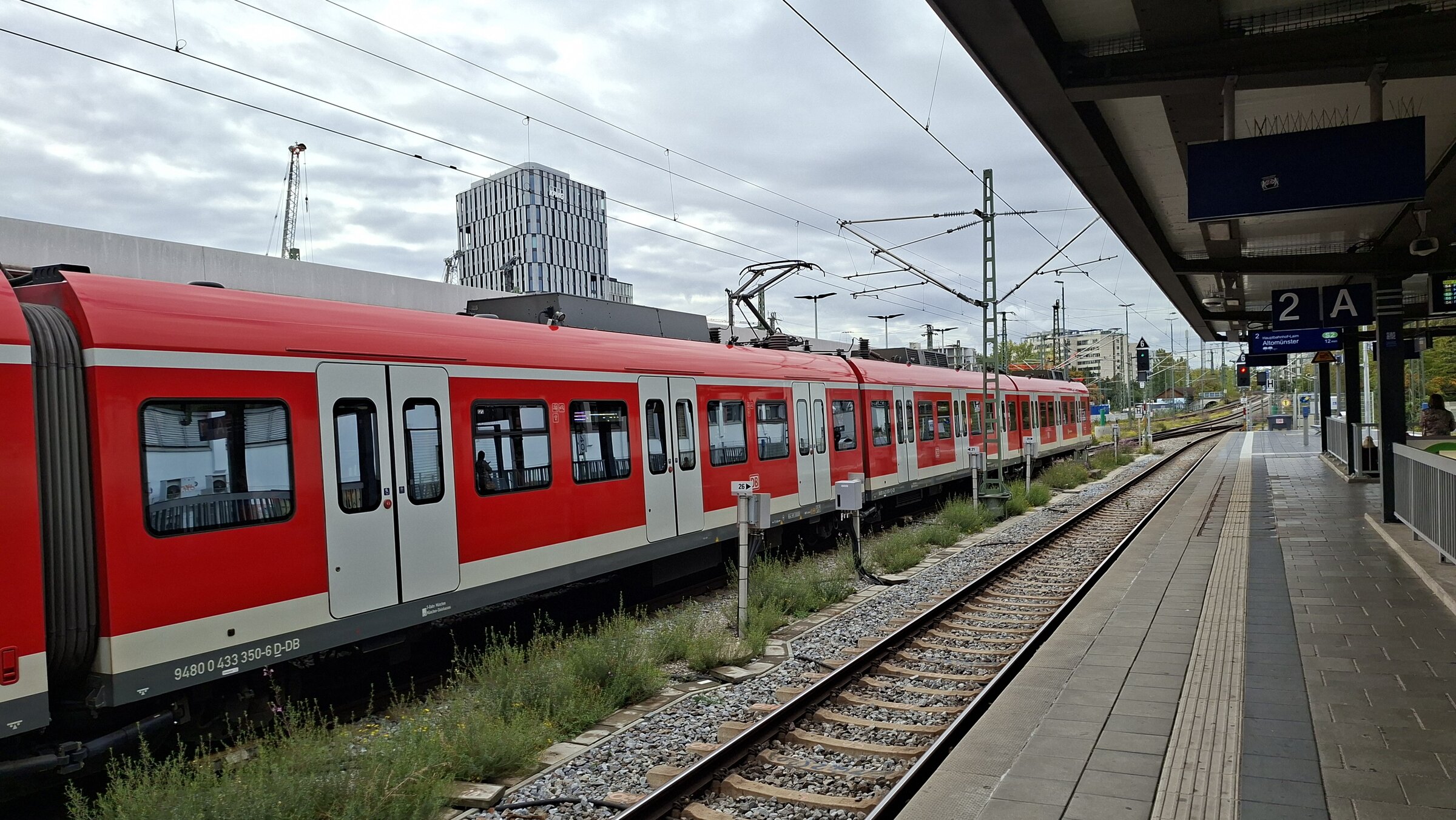
The departure boards show the line, destination, platform and minutes. Airport trains are marked with a plane symbol.
1 / 10Useful links
- Stadt München, Umweltzone — low emission zone and the rules
- Stadt München, interactive map of the Umweltzone
- Stadt München, how to get the green sticker
- ADAC, green sticker and foreign-registered cars — overview PDF in English
- Lufthansa Express Bus — timetable, prices
- muenchen.de, S-Bahn timetables and the airport lines
- BRB, RE 5 Munich to Salzburg
- Deutsche Bahn, Bayern-Ticket to Salzburg
- Stadt München, second S-Bahn trunk line
- muenchen.de, strikes 2026
More in Munich & Surroundings
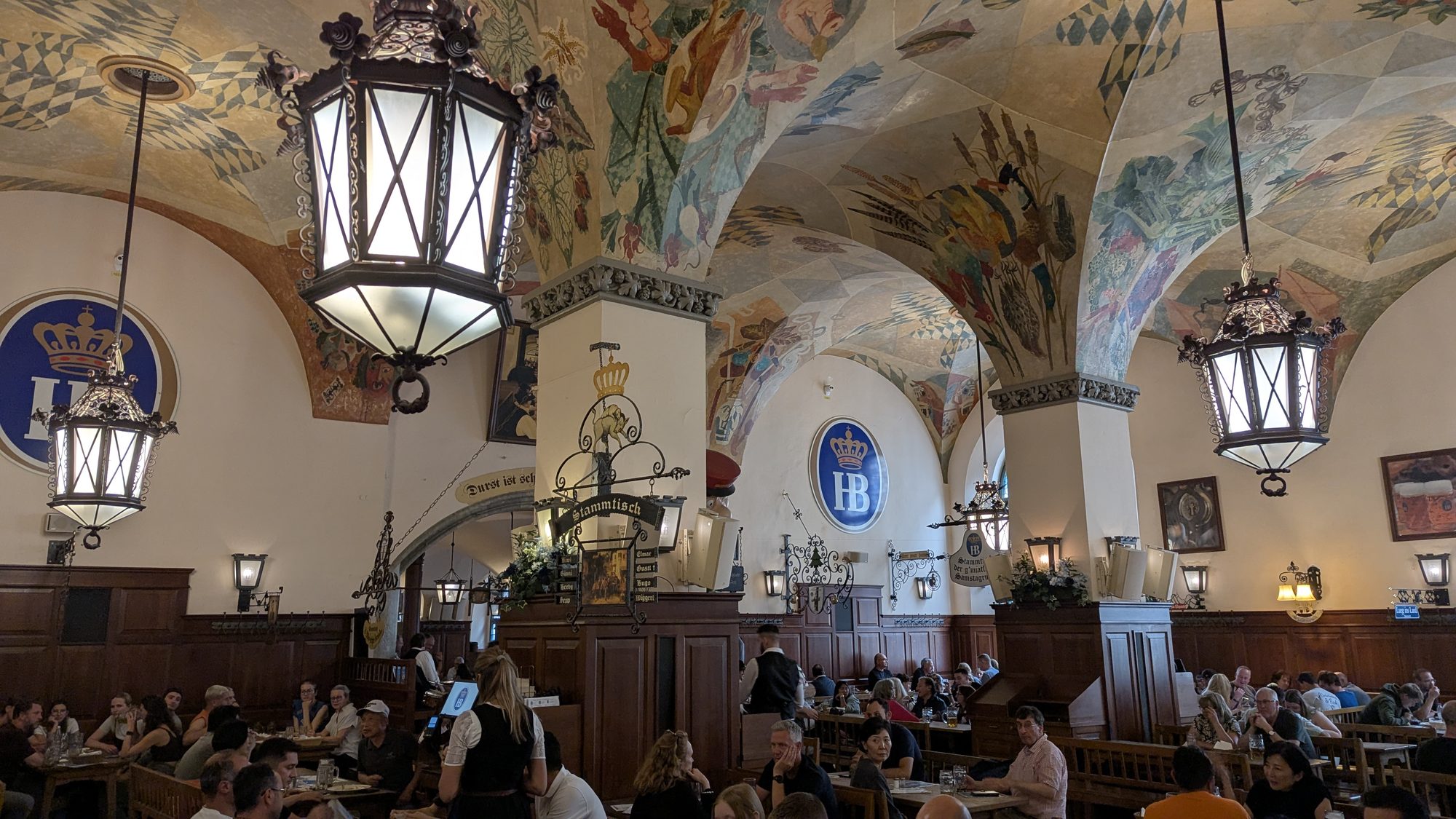
Hofbräuhaus vs. Schneider Bräuhaus: Two Munich Beer Halls, Two Days in a Row
The first beer hall I ever sat down in was the Hofbräuhaus, back in 2014 when I was still just a tourist. This autumn I went again and, the next day, added the Schneider Bräuhaus. Same city, same pork, very different experiences.
Trains in Bavaria: Bayern-Ticket & Day Trips from Munich
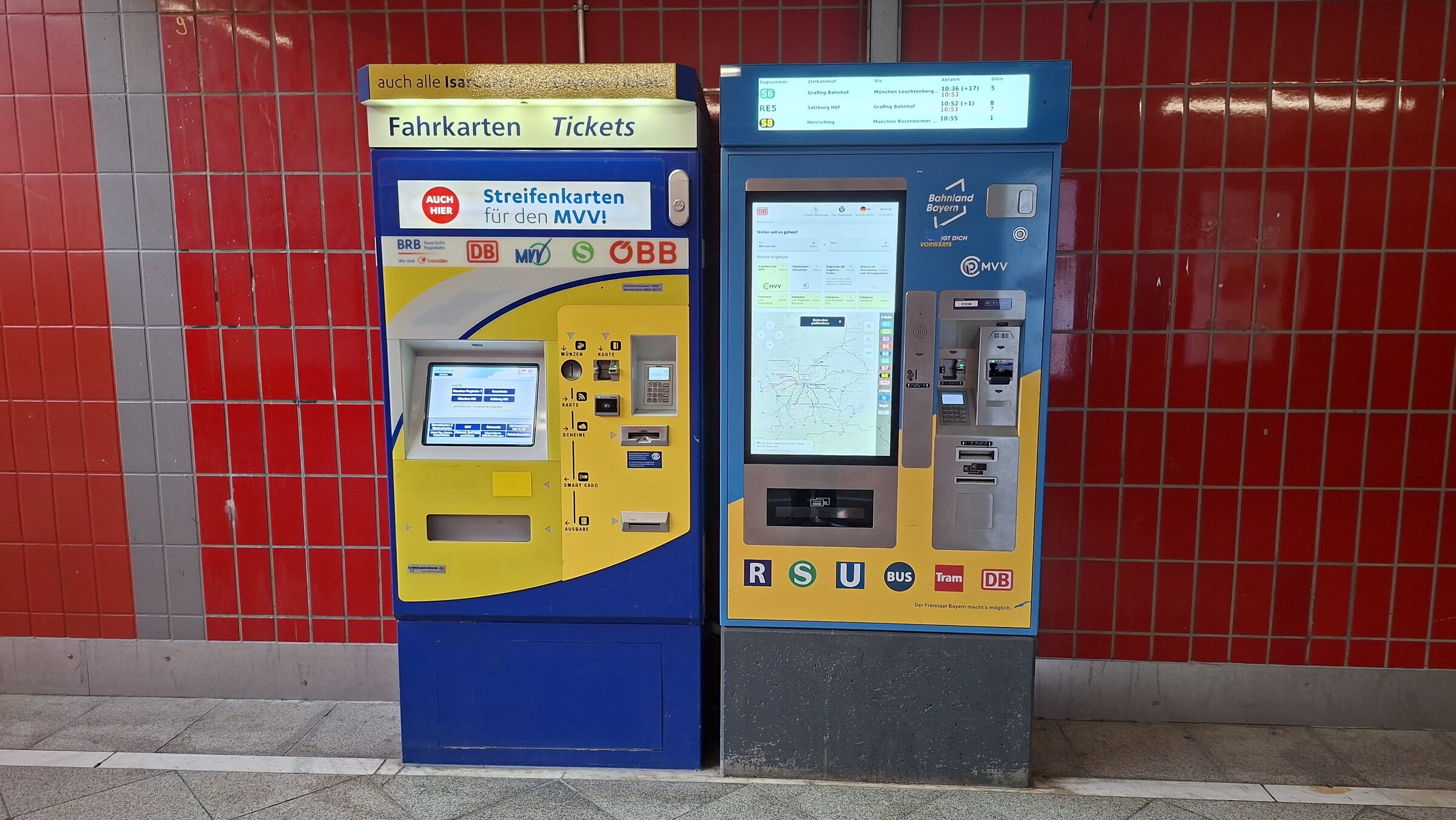
There's one ticket I reach for on almost every trip in this guide: the Bayern-Ticket. Here's exactly what it covers, when it actually kicks in, how the price drops with every person you add, and the one lookalike ticket at the machine that's worth knowing the difference from.
Getting Around Munich: Tickets, Airport Transfers & Bikes
Munich's U-Bahn, S-Bahn, trams and buses all run under one ticket system — the real question is which ticket actually fits your trip. Here's how to pick it, how to get to and from the airport, what to do when a weekend closure swaps your train for a bus, and everything else I wish someone had told me before I worked it out myself.
New trips, straight to your inbox
No spam. Just the routes, how to get there by train, and the best time to go.
By subscribing, you agree to receive the Haki Travels newsletter. We'll send you one email to confirm your subscription, and you can unsubscribe at any time. Privacy Policy