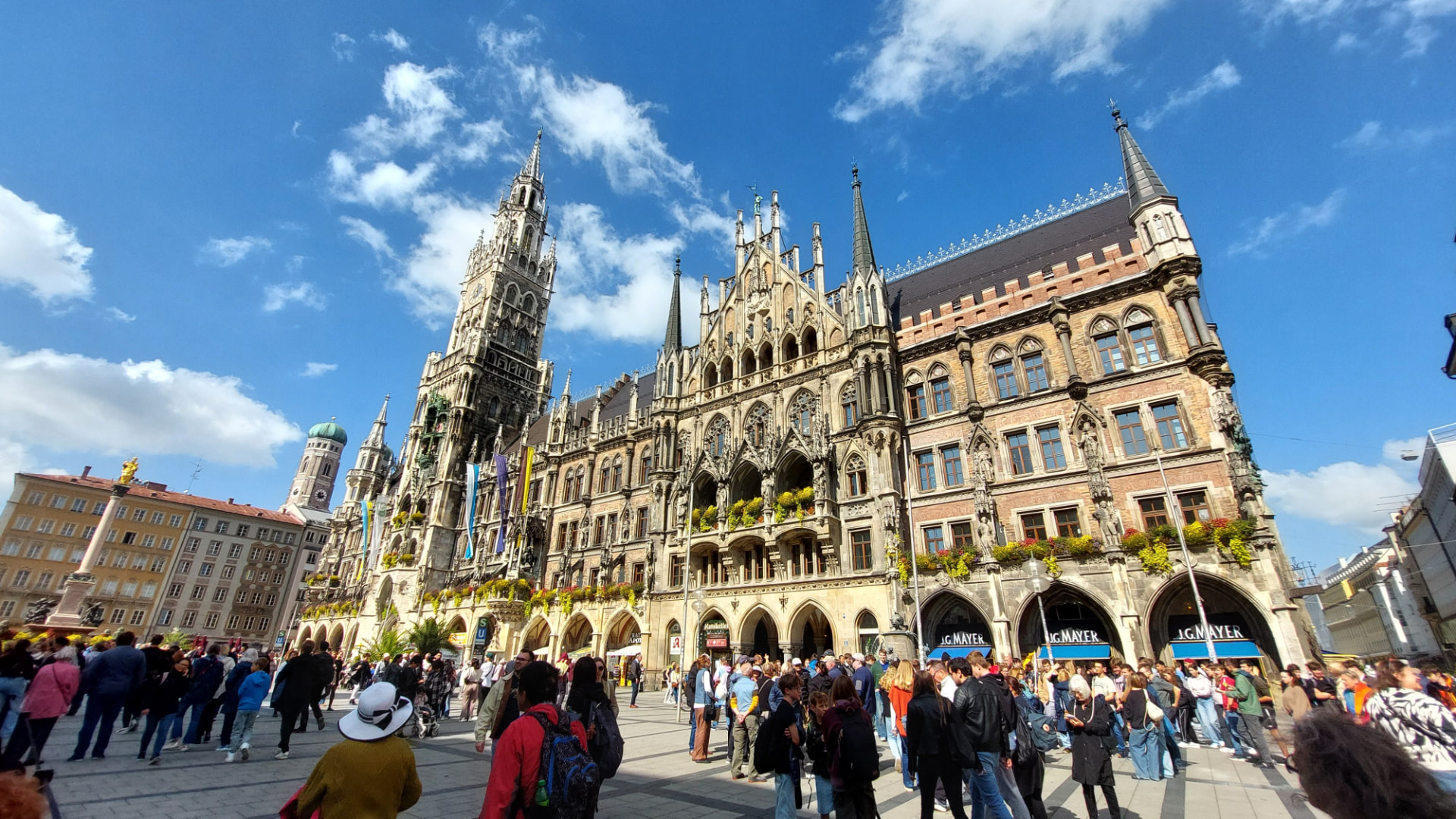
Munich · Munich & Surroundings
One Day in Munich: How a Local Would Actually Spend It
Personally visited by Martin · 19 September 2026
This is the route I actually take people on when they've only got one day in Munich — not a checklist of every famous sight, but the walk that starts at the square everyone calls by its nickname, takes a detour through a church most tourists miss, and ends with a choice: watch the sunset from a palace garden, or keep going to a hill with the best view in the city. It fits in a day on foot, tram, and (if you want) a rented bike, and every stop on it is one I go back to myself.
Morning: a square, a cathedral, a market, and the bells
Start at Karlsplatz, which no one actually calls Karlsplatz — everyone says Stachus, after a long-gone tavern keeper whose nickname stuck harder than the official name ever did. The 200-nozzle fountain and the medieval Karlstor gate mark where car traffic stops and the Old Town's pedestrian zone begins; walk through the gate and you're on Neuhauser Straße, heading straight for the center.
Ten minutes in is Frauenkirche, Munich's cathedral — a city law says nothing in the historic center may be built taller than its two towers, which is why they still dominate the skyline. Free to walk into — look for the "Devil's Footprint" just inside the entrance, a dark mark in the floor tied to a legend about the devil, a bet, and a church built without visible windows from where he was standing. If you want the view, the south tower is climbable (elevator plus a short stair) for a look over the rooftops and, on a clear day, the Alps.
From there it's a couple of minutes to Marienplatz — time it for the Glockenspiel, which plays at 11:00 and 12:00 year-round, plus 17:00 between March and October, with 43 bells and 32 figures re-enacting a 16th-century royal wedding and a jousting tournament. There's also a quieter, less-known 21:00 show with the night watchman and the Münchner Kindl, if you're still out that late. Viktualienmarkt, Munich's open-air market since 1807, is right there too — the blue-and-white maypole marks it as a proper Bavarian trading square, not a tourist stage. Get a Brezn, some fresh berries if they're in season, and if you're hungry enough this early, a Weißwurst with sweet mustard.
Midday: a quiet church and a real beer garden
Two minutes off Marienplatz on Sendlinger Straße is Asamkirche, a Baroque chapel the Asam brothers built for themselves in the 18th century — gold detailing, frescoed ceiling, no entry fee, and most people walk straight past the narrow front without realizing what's inside. It's the kind of stop that takes ten minutes and stays with you longer than most of the famous ones.
You don't need to queue for a table at Hofbräuhaus near Marienplatz to see it — walk straight in for a few minutes instead. The frescoed ceiling over the main hall is worth the look on its own, and along the back wall are the regulars' mug lockers — 616 of them, holding the personal ceramic Maßkrug of Stammgäste who've earned a spot, a tradition dating to 1972 when the regulars refused to switch to standard glasses. The toilets in the back are free, which is worth knowing mid-walking-tour. It's also a heavier stop than the beer-hall atmosphere lets on: Hitler gave the speech introducing the Nazi Party's 25-point program in the hall's upstairs Festsaal in February 1920, one of several early Nazi gatherings held here — worth knowing before you walk in, since nothing inside points it out. For lunch, keep walking to Hofbräukeller am Wiener Platz instead — same beer, same Bavarian menu, a fraction of the tourists, and proper shaded seating under chestnut trees. Order a Radler if it's warm, a Schweinebraten if you're hungry, or just Obazda and a pretzel if you're pacing yourself for later.
Afternoon: the park that doesn't feel like a park
The Englischer Garten is bigger than Central Park, and it doesn't feel like a city park once you're a few minutes in. Head first to the Eisbach, the stretch of river right at the park's southern edge where surfers ride a standing wave a few meters from the street — it looks staged the first time you see it, and it isn't. From there it's a walk north to the Monopteros, a Greek-style pavilion on a small hill built in the 1830s, with one of the better skyline views in the city for the price of a short climb.
This is also the easiest place in Munich to rent a bike — MVG Rad, Call a Bike, and Nextbike all have stations right around the park, at roughly €0.10 a minute or a flat day rate, and over 200 km of paths mean you can cover a lot more ground than on foot if the afternoon is getting away from you.
Evening: palace gardens, and a choice of where to watch the sun go down
Two ways to get to Schloss Nymphenburg, the former royal summer residence: tram 17 straight there in about twenty minutes, or — if you'd rather arrive through green space than a tram window — the Botanischer Garten München-Nymphenburg (€5.50, open until 18:00 in summer), whose south entrance leads directly into the palace park. Either way, you don't need to go inside the palace itself to get the best of it — the gardens, canals, and bridges are free to walk and are at their best in the low evening light, once the crowds have mostly cleared out.
From here you've got a choice for how to end the day. Staying in the Nymphenburg gardens for sunset is the easier option — no more walking, and the canals catch the light well. Or push on to Olympiapark for Olympiaberg, an artificial hill built from wartime rubble, with a walk-up view over the whole city and, on a clear evening, the Alps on the horizon. That's where I actually go to watch the sun go down myself — no ticket, no crowd management, just a hill and a view that makes the whole day feel like it was worth the walking. Nymphenburg is the calmer finish; Olympiaberg is the better view if you've still got the legs for it.
Haki tip: Don't try to do all of this in the order it's written — if you're tired by Nymphenburg, just stay there for sunset instead of pushing on to Olympiapark, and save the hill for another evening. The one stop I wouldn't cut is Asamkirche; it's the one everyone forgets and nobody regrets.
- Is this actually doable in one day?
- Yes, on foot and tram, though it's a full day — you're covering Stachus, the old town, the English Garden, Nymphenburg, and possibly Olympiapark. If you're short on time or energy, cut the tower climb at Frauenkirche and pick just one of the two sunset options rather than both gardens and the hill.
- Do I need a car?
- No — everything on this route is reachable by tram, U-Bahn, or on foot, and a rental bike covers the Englischer Garten stretch faster than walking if you want more time elsewhere.
- What if it's raining?
- Frauenkirche, Asamkirche, the Viktualienmarkt covered stalls, Hofbräukeller's indoor seating, and the Botanical Garden's greenhouses all still work. The Eisbach surfers go out in most weather, but a hilltop or garden sunset obviously needs a clear evening — save that part for good weather and swap in something indoors if it's not.
Photos from the day
All shot by me on the visit. Swipe through.
Karlstor — walk through this gate and you're in the old town proper. Start here if you're coming from the Hauptbahnhof, it's a five-minute walk.
1 / 23Useful links
- MVV — ticket and price overview — Current single and day-ticket prices for getting around by tram/U-Bahn/bus
- Munich Glockenspiel — show times — Official daily performance times at Marienplatz, updated when the schedule changes
- Frauenkirche — visitor information and tower — Opening hours and tower climb price/hours
- Hofbräuhaus — Stammtische and regulars' mug tradition — Official background on the regulars' tables and the 616 mug lockers
- Botanical Garden Munich-Nymphenburg — hours and tickets — Current opening hours and admission if you take the garden route into Nymphenburg
- Schloss Nymphenburg — visitor information — Official opening hours and admission prices if you want to go inside the palace
- MyRadl bike sharing in the MVGO app — Current bike-share locations, availability and prices for MyRadl in Munich and the wider MVV area.
Quick facts
- Region
- Munich & Surroundings
- Access
- You're already there — this is a full-day walking route through the city itself, on foot, tram, and (if you want) a rented bike.
- Distance
- 0 km from Munich
- Cost
- €
- Best months
- Year-round for the old town and the parks. Long summer evenings give more daylight for the full route and a later, higher sunset from Olympiaberg.
- Crowds
- medium crowds (my assessment)
Where it is
Munich, Germany
Weather
Full forecastMore in Munich & Surroundings
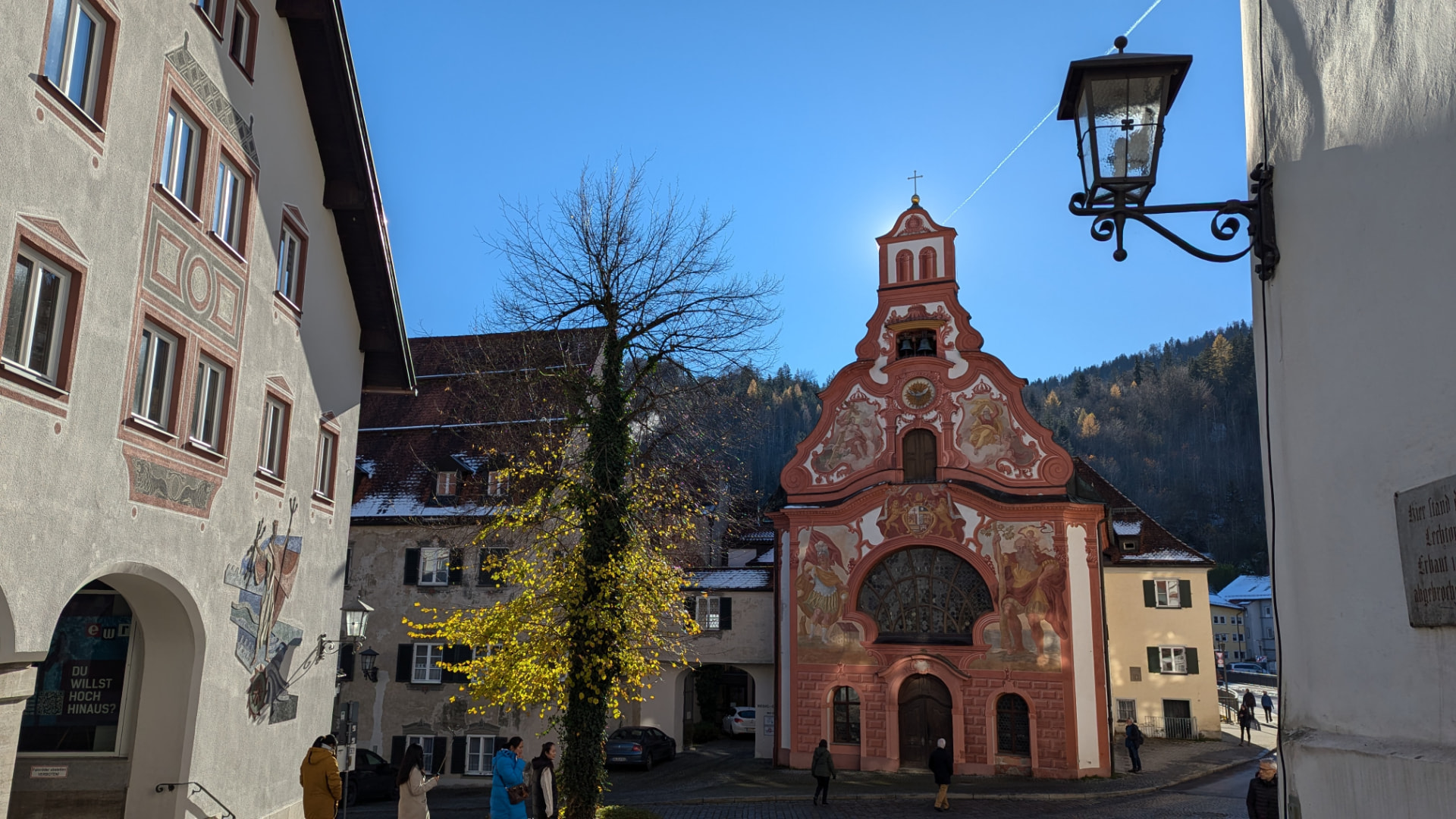
Renting a Car in Bavaria: What You Actually Need to Know
I don't rent a car when I'm in Bavaria — every trip on this blog gets there by train — but plenty of readers travel with family, gear, or a schedule that public transport just doesn't match. So here's everything I'd want to know before renting one here, checked against the actual rules rather than a rental company's fine print.
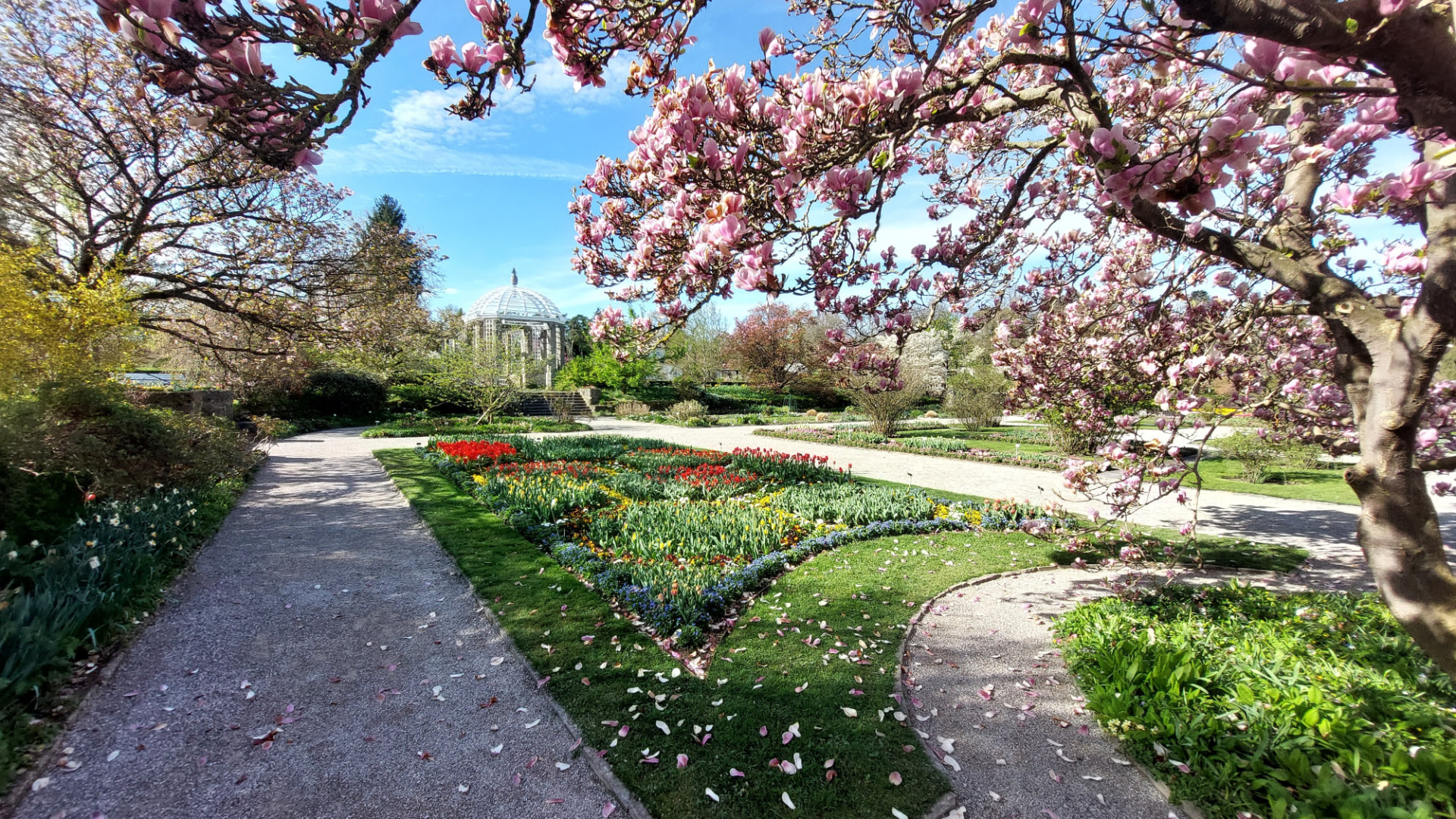
When to Visit Bavaria: A Season-by-Season Guide
I've now hiked, eaten, and trained my way across Bavaria in spring, summer, and autumn — Bamberg in May, Eibsee and the Zugspitze in June and July, Karwendelbahn and Rotwand in September. Every season here looks like a different country. Here's what actually changes, month to month, based on what I've seen myself plus what I checked to fill the gaps.

Food & Drink in Bavaria: What to Actually Order
I've eaten my way through the Bavarian classics by now — Weißwurst the proper way before noon, Schweinshaxe, Kaiserschmarrn at a mountain hut after a hike, Obazda with a fresh Brezn — and worked through most of the beer list too, from a Helles straight out of the barrel at Augustiner to a Maß of Festbier at Oktoberfest. Here's what's actually worth ordering, how the beer gardens work, and why the rules are stricter than they look.
New trips, straight to your inbox
No spam. Just the routes, how to get there by train, and the best time to go.
By subscribing, you agree to receive the Haki Travels newsletter. We'll send you one email to confirm your subscription, and you can unsubscribe at any time. Privacy Policy